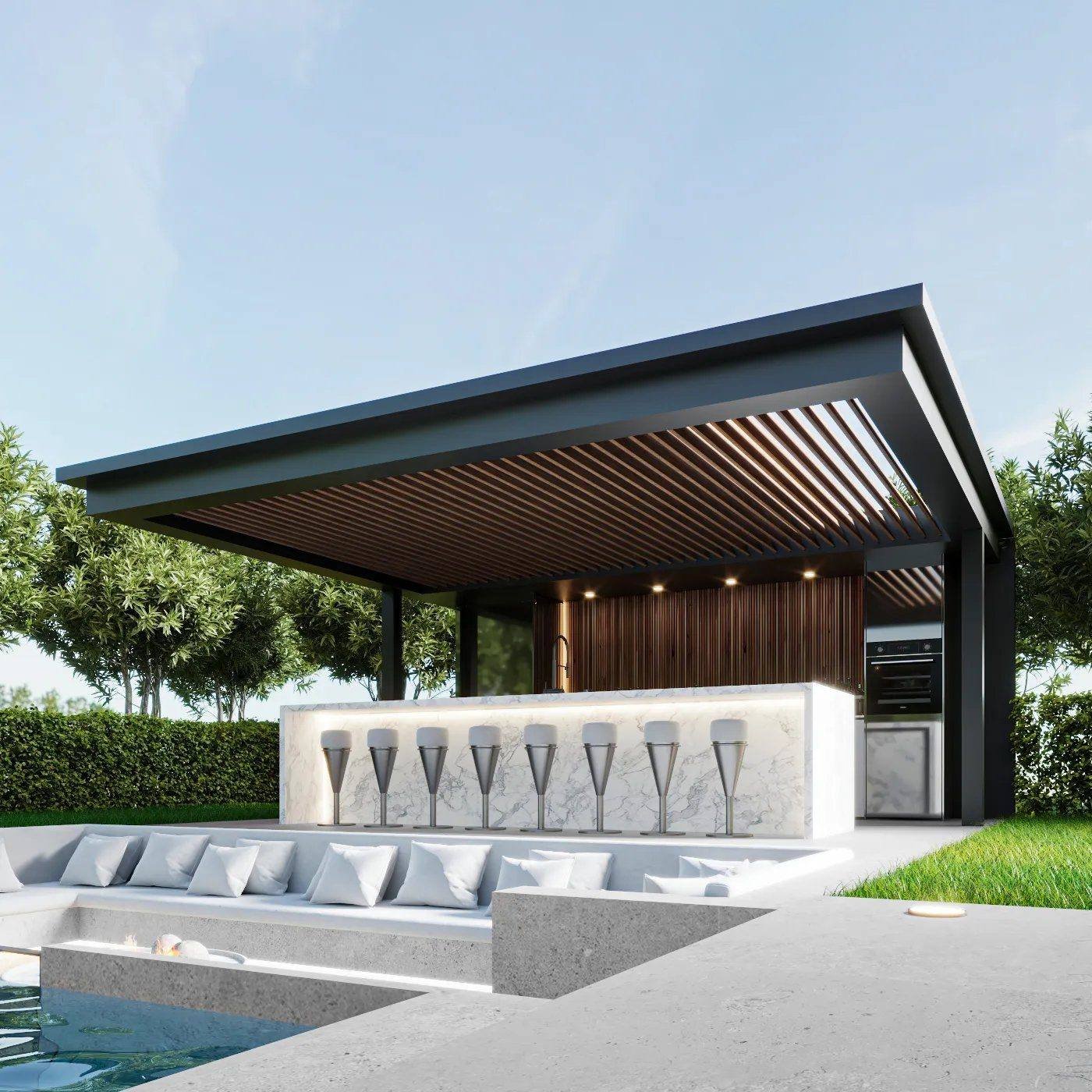
Outdoor majlis
Shade structure, built-in seating, outdoor upholstery from our own Al Quoz workshop, fans and misting, lighting and privacy screens — planned together so the majlis is used most evenings of the year, not just in winter. Developer NOC handled.
An indoor majlis is for the formal occasion. The outdoor majlis is where the family actually sits most evenings — tea after sunset, guests who arrive late, Ramadan nights, the winter months when the garden is the best room in the house. Done well it is a built structure with proper seating for a dozen people, shade that is in the right place at five in the afternoon, air moving through it, lighting that is low and warm, and enough privacy from neighbours and the street that people relax in it.
Done badly it is a few garden sofas under a kit pergola, the cushions fading in a season and nobody sitting there in June. We design the majlis as part of the whole garden: its position against the villa, the pool and the view; its footings and services set out with the drainage and lighting mains; the benches cast or built with the structure and upholstered in our Al Quoz workshop in outdoor-rated materials. We also make the indoor majlis, so the two can share a language rather than compete.
Majlis types
The form follows how you will use it, how private the plot is and what your community allows above the boundary wall.
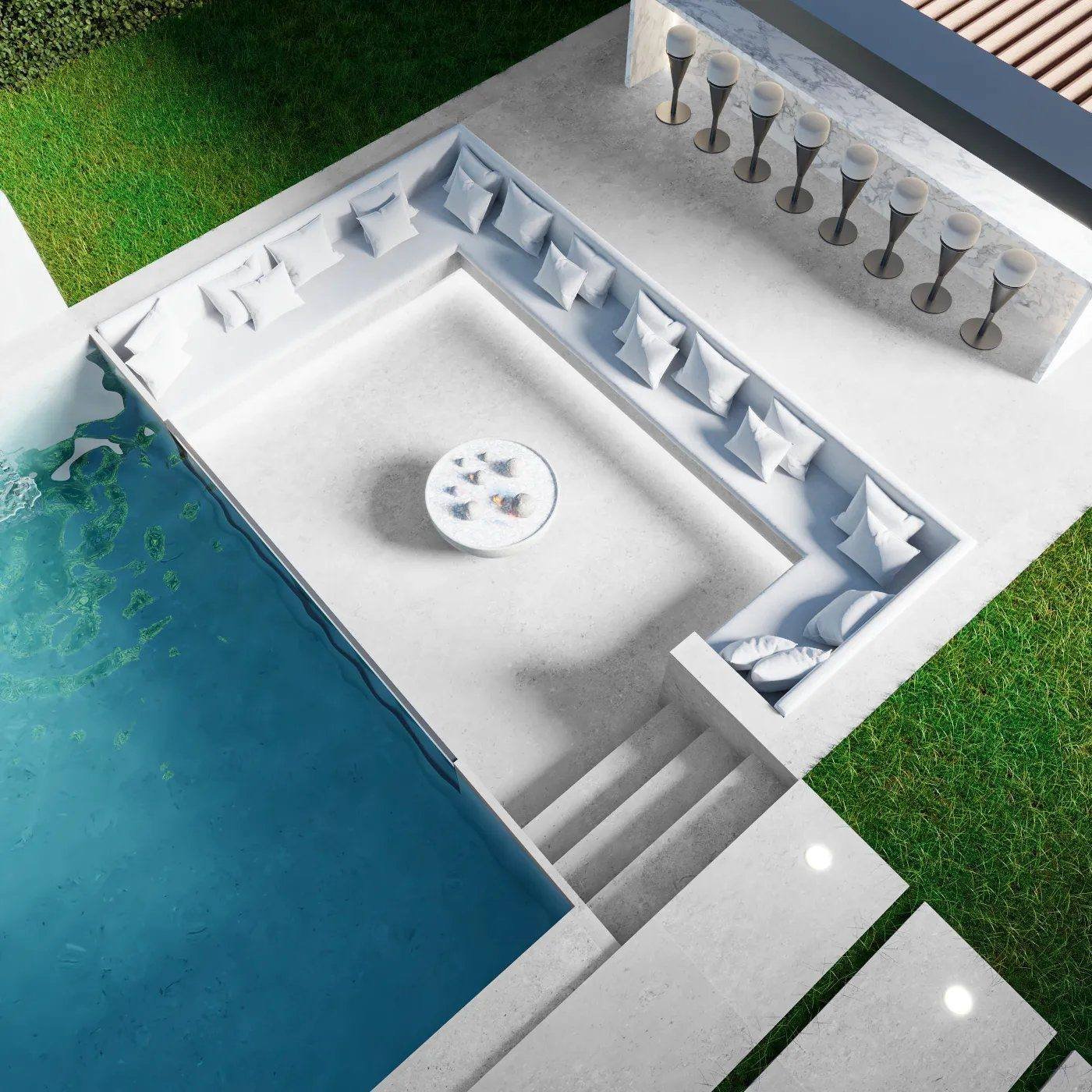
Seating cast below garden level, often within the pool surround, so the structure, waterproofing and drainage are one system. See Golf Place.
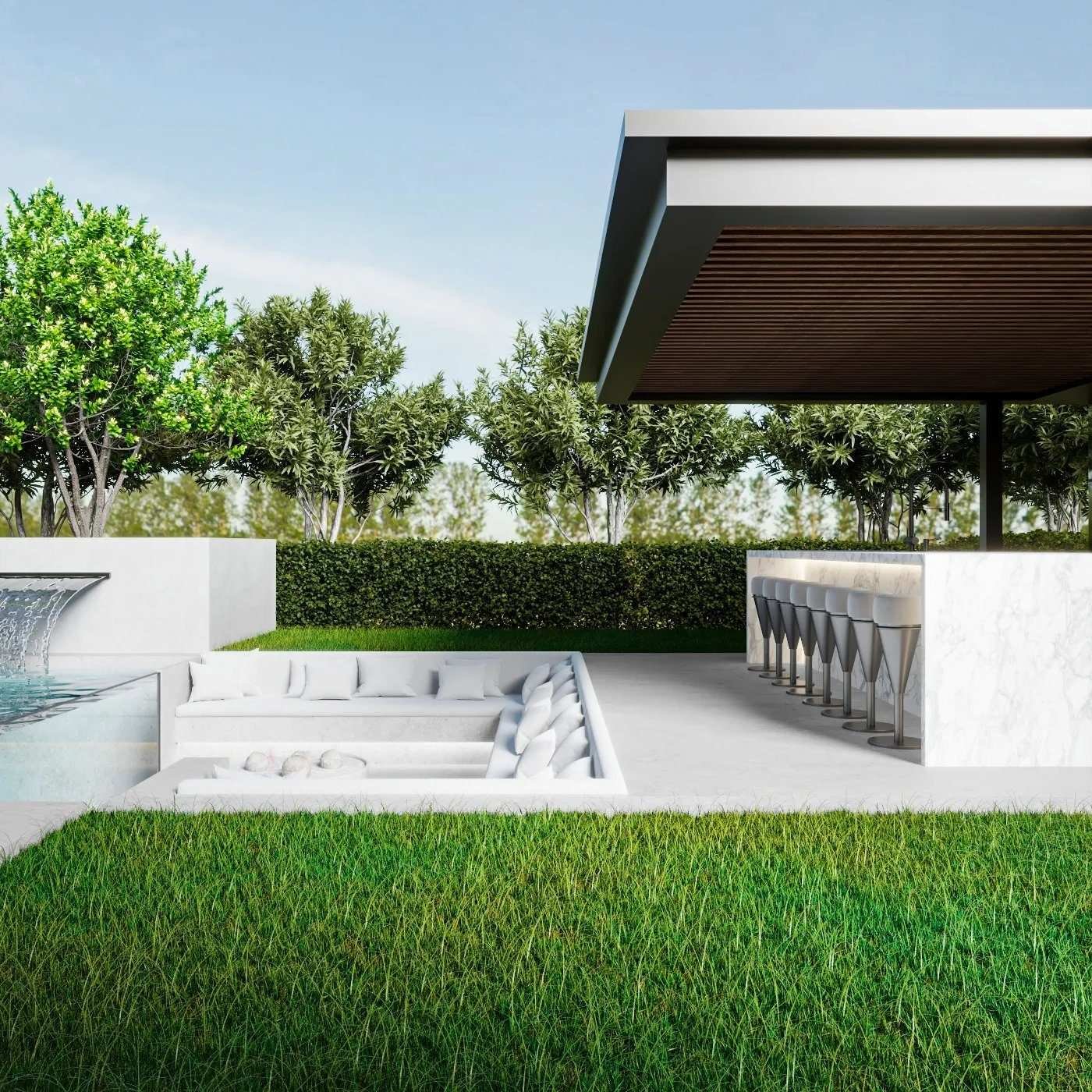
Built-in benches under a pergola or pavilion, open on the sides for air, with fans and misting in the ceiling.

A fully roofed garden room with a ceiling, lighting, fans and side screens or glazing for use through most of the year.
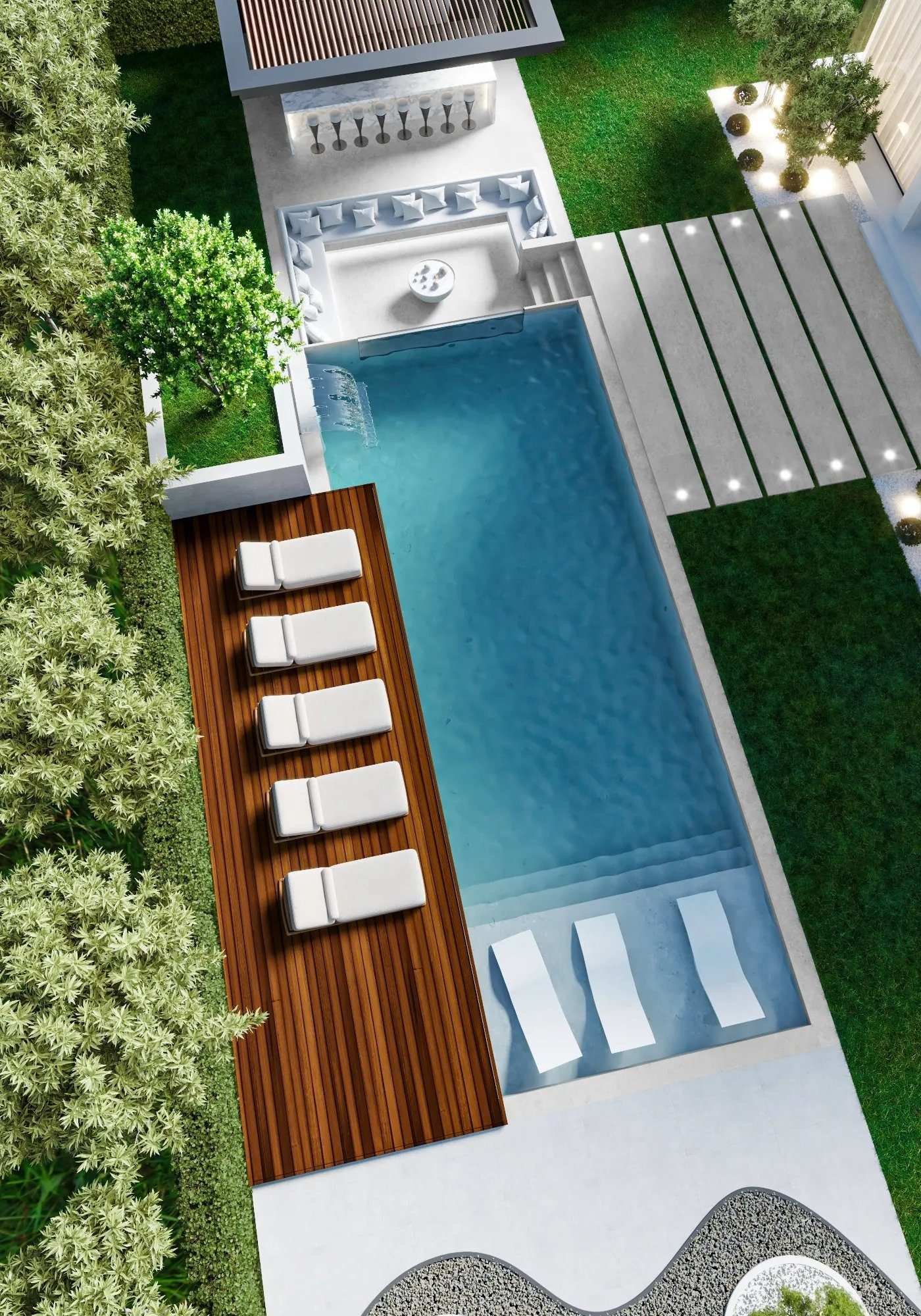
Benches, backs and cushions made in our workshop in solution-dyed fabrics and quick-dry foams that cope with sun and pool splash.
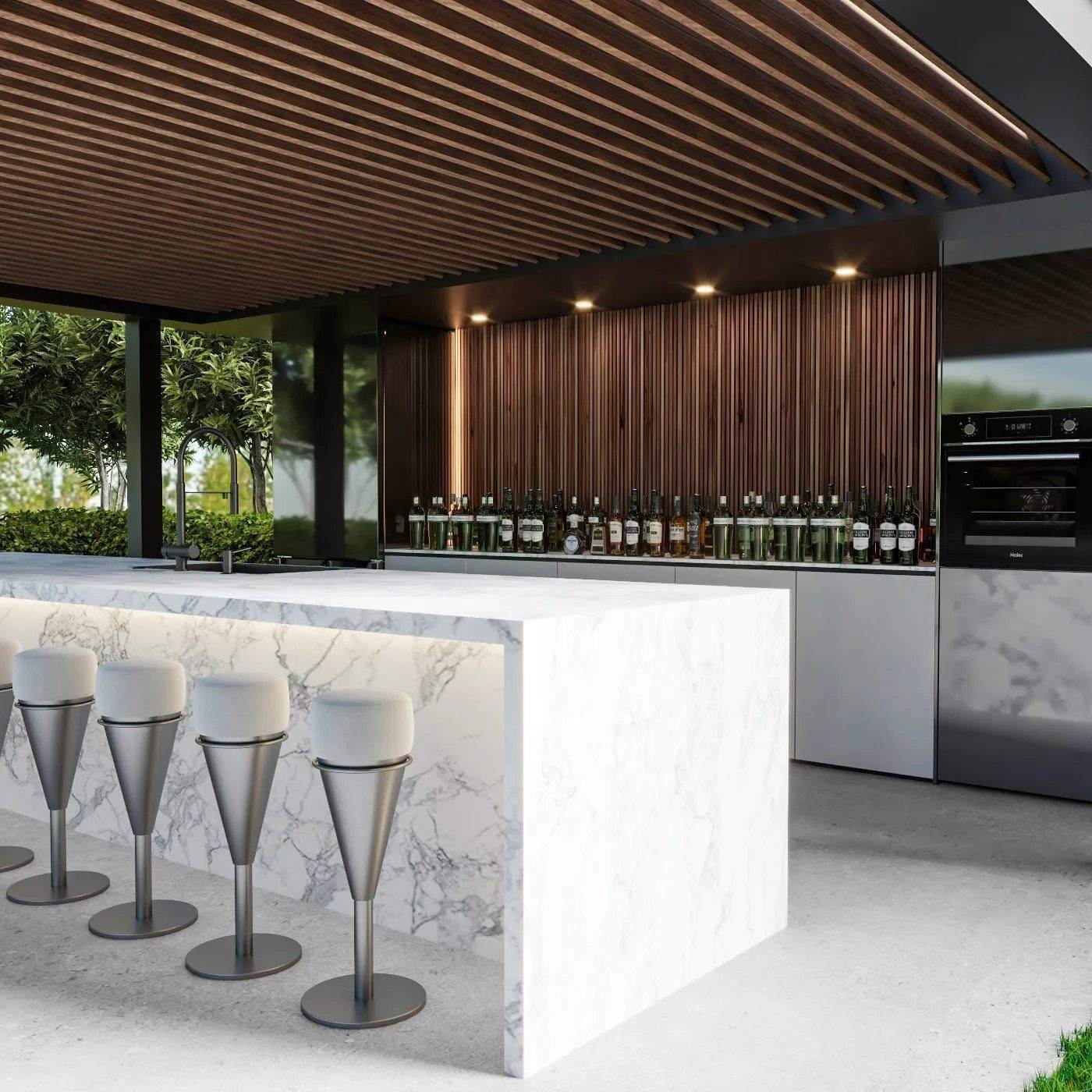
A tea and coffee counter with water and power, a gas fire feature for winter and weatherproof storage for cushions.

Slatted timber or mashrabiya screens, drop blinds and hedging to close the majlis from the neighbours and the road.
Design & build
Four decisions made at the start decide whether the majlis is in use in September or waiting for December.
Book a site visitWe place the majlis where the afternoon sun is blocked by the villa, a wall or the structure itself, where it looks at the pool or the garden rather than the AC units, and where it is reached easily from the kitchen. Then we check the position against your developer’s rules on structure height, setback from the boundary and what may be visible from the street, and carry the NOC. Emaar communities such as Dubai Hills Estate and Nakheel communities such as Al Furjan each have their own.
Power for fans and lighting, water for misting or a tea station, gas for a fire feature and a drainage outlet for a sunken floor are all run while the ground is open, with the structure’s footings cast at the same time. Adding any of them to a finished terrace means lifting it.
Timber frames, slatted ceilings, screens and bench carcasses are made by our own joiners in Al Quoz and brought to site finished for outdoor use. Benches are sized to how people actually sit in a majlis — deeper and lower than a sofa, with backs that take floor cushions.
Cushions and backs are upholstered in our workshop in solution-dyed outdoor fabric over quick-dry foam, with covers that come off to wash. Fans, misting, concealed strip lighting under benches and in the ceiling, and any fire feature are installed and tested, and planting is finished around the structure.
Recent outdoor work
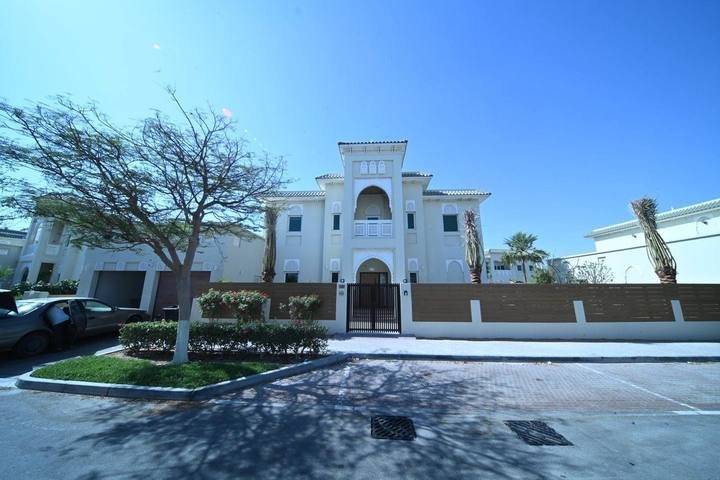
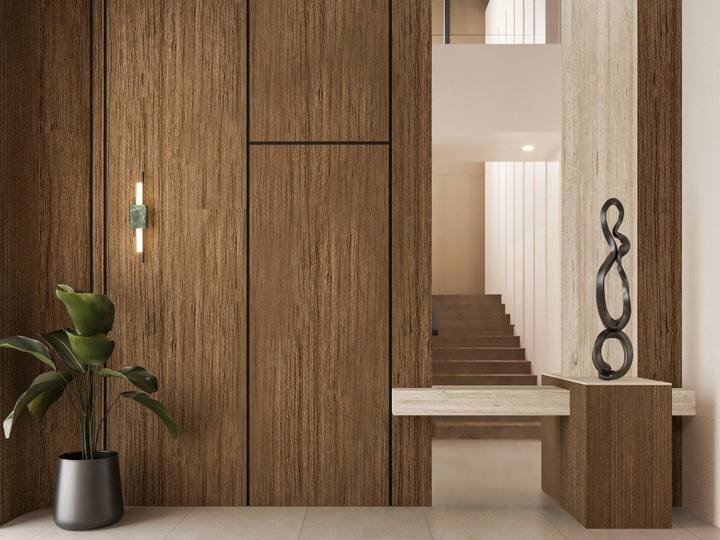
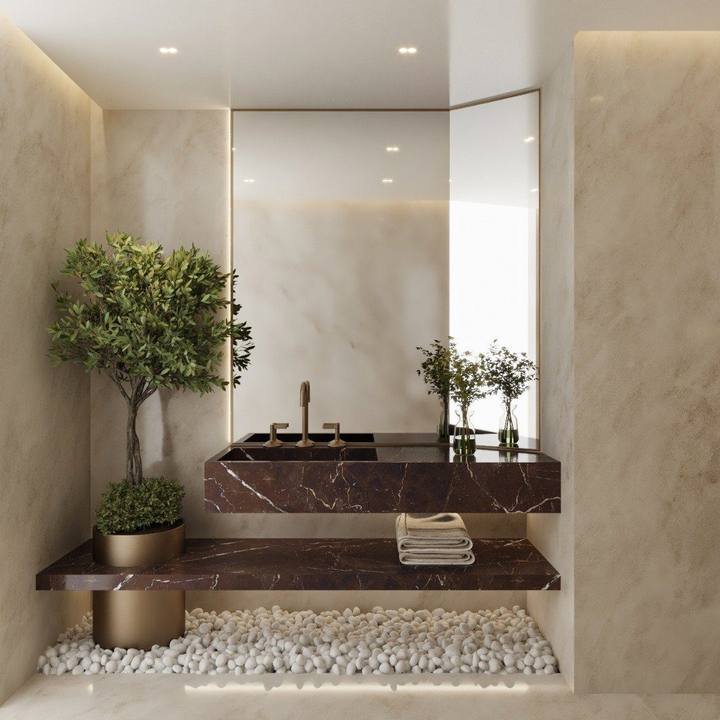
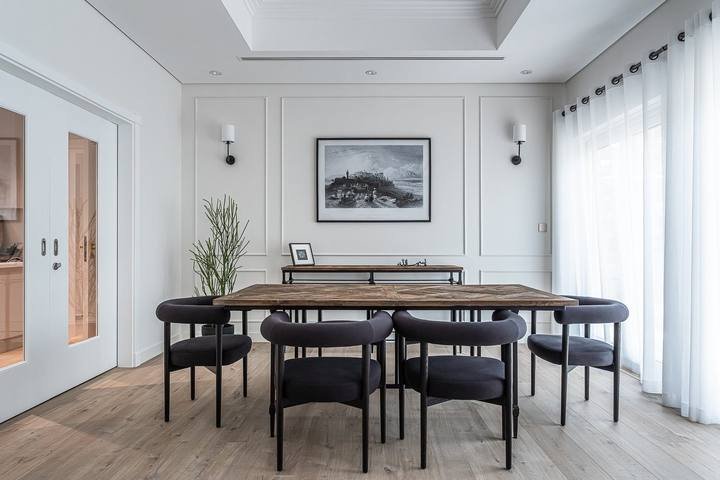
Dubai Hills, Al Furjan, Meydan and Abu Dhabi, indoors and out.

Scope & programme
A shaded bench for six and a roofed, cooled room for twenty are different projects. These are the decisions in between.
A pergola over built-in benches is the simplest. Sinking the floor adds excavation, retaining structure, waterproofing and drainage. A solid roof with a ceiling adds structure, usually a permit, and makes fans and lighting far more effective.
Majlis seating runs around three sides and is sized by the number of guests. Cast-in-situ benches are part of the structure; timber-framed benches from our workshop can be reconfigured. Both are upholstered in-house.
Ceiling fans are the baseline. Misting lines add water and a pump. Evaporative or spot cooling adds plant and power and only works well in an enclosed or roofed majlis. We match the cooling to the months you want to use it.
Solution-dyed acrylic fabrics and quick-dry foams cost more than standard outdoor ranges but hold colour against Dubai sun and dry after pool splash or a hose-down. Removable covers add a line and years of use.
A tea station with water and power, a gas fire feature, a television niche and weatherproof cushion storage each add services that must be run before paving, so we ask about them at the brief.
Screens and planting to close the majlis from neighbours add to the structure and to what the developer sees from the street. Structures within the community’s rules clear the NOC quickly; roofed rooms above them take a DM or Trakhees permit.
Tell us how many people the majlis is for and when you want to use it. We will look at the plot in the afternoon light, check your community’s rules and come back with a design and a BOQ for the structure, seating, cooling and lighting together.
Common questions
Approvals, cooling, upholstery and using it through the year. If yours is not here, call +971 50 448 3095.
In every major community, yes. The developer issues an NOC for garden structures and checks the height, the setback from the boundary and what is visible above the wall. A shaded, open-sided majlis within those limits usually needs only the NOC. A roofed majlis room, a sunken structure or one with gas, water and substantial power usually also needs a Dubai Municipality permit on the mainland or Trakhees approval in Nakheel and PCFC communities. We check the rule for your community and carry the submissions.
In the evenings, yes, if it is designed for it: shade on the western side, ceiling fans moving air, misting on the hottest nights, light-coloured surfaces that do not store heat, and the seating kept out of the pool’s reflected glare. A roofed and screened majlis with spot cooling extends that into more of the day. An open bench under a thin pergola will not be used between June and September, whatever the brochure says.
A seating area set below garden level, often beside or within the pool surround, so that sitting eye level is close to the water and the garden rather than above it. The structure is cast with the pool shell, waterproofed as part of it and drained to the pool system, which is why it has to be designed with the pool rather than added later. See the one at Golf Place in Dubai Hills.
Bench carcasses are either cast concrete or marine-grade timber from our workshop. Cushions use quick-dry foam that drains rather than holds water, covered in solution-dyed acrylic fabric that is coloured through the fibre so it does not fade, with removable covers that go in the wash. We also build weatherproof storage so cushions are not left out through the summer.
Yes. We design and build indoor majlis too, and the same workshop makes both sets of joinery and upholstery, so the timber, the seating height, the fabric family and the lighting language can run from the formal room inside to the garden outside.
All three, if they are decided before the paving goes down. A television needs a shaded, ventilated niche and power; a gas fire feature needs a gas line and clearances; a tea and coffee station needs water, drainage and power. We run all of it with the garden services at the civil works stage.
As private as the plot and the community rules allow. Slatted timber or mashrabiya screens on the exposed sides, drop blinds for the evening, dense hedging and the position of the structure relative to neighbouring upper windows all contribute. Screens count as part of the structure for the developer’s visibility rules, so we design them into the NOC drawing.
Yes. We survey the existing levels, drainage and services, confirm what can be reached without lifting the whole terrace and design around it. Where cables or water have to cross finished paving we tell you which line of paving comes up and reinstate it as part of the job.
Yes. We deliver across the UAE, including Abu Dhabi and Sharjah, with the approval route adjusted for each emirate and master developer.