
Custom curtains
Made-to-measure curtains, sheers and blackout, on tracks that were set into the gypsum before it was closed, motorised where you want them, hung by our own fitters — for villa-height windows, full-width sliding doors and tower apartments.
Curtains in Dubai are usually the last thing to go in and the first thing to look wrong. The ceiling has been closed, so the track is screwed to the face of the gypsum where it shows. The window is full-width but the track stops short, so the curtains cannot clear the glass. The sheer and the blackout share one track, so neither works. The drop was measured before the floor went down, so the hem floats. None of this is the fabric’s fault.
We specify curtains at the same time as the ceiling. The track position, the recess or pelmet, the stack-back and any motor are drawn on the gypsum ceiling set, the channel is formed and the motor wired while the ceiling is open, and the curtain is made to the finished drop after the floor is laid. If you want them motorised, the cabling is coordinated with the home automation rather than retrofitted. Fabric is chosen from samples hung in the room, in daylight and at night, against the sofa and the headboard we may also be making.
What we make
Every window is measured individually. Nothing is made to a standard drop.

Floor-to-ceiling sheers on wave headings with weighted hems, so they hang straight under the air conditioning.
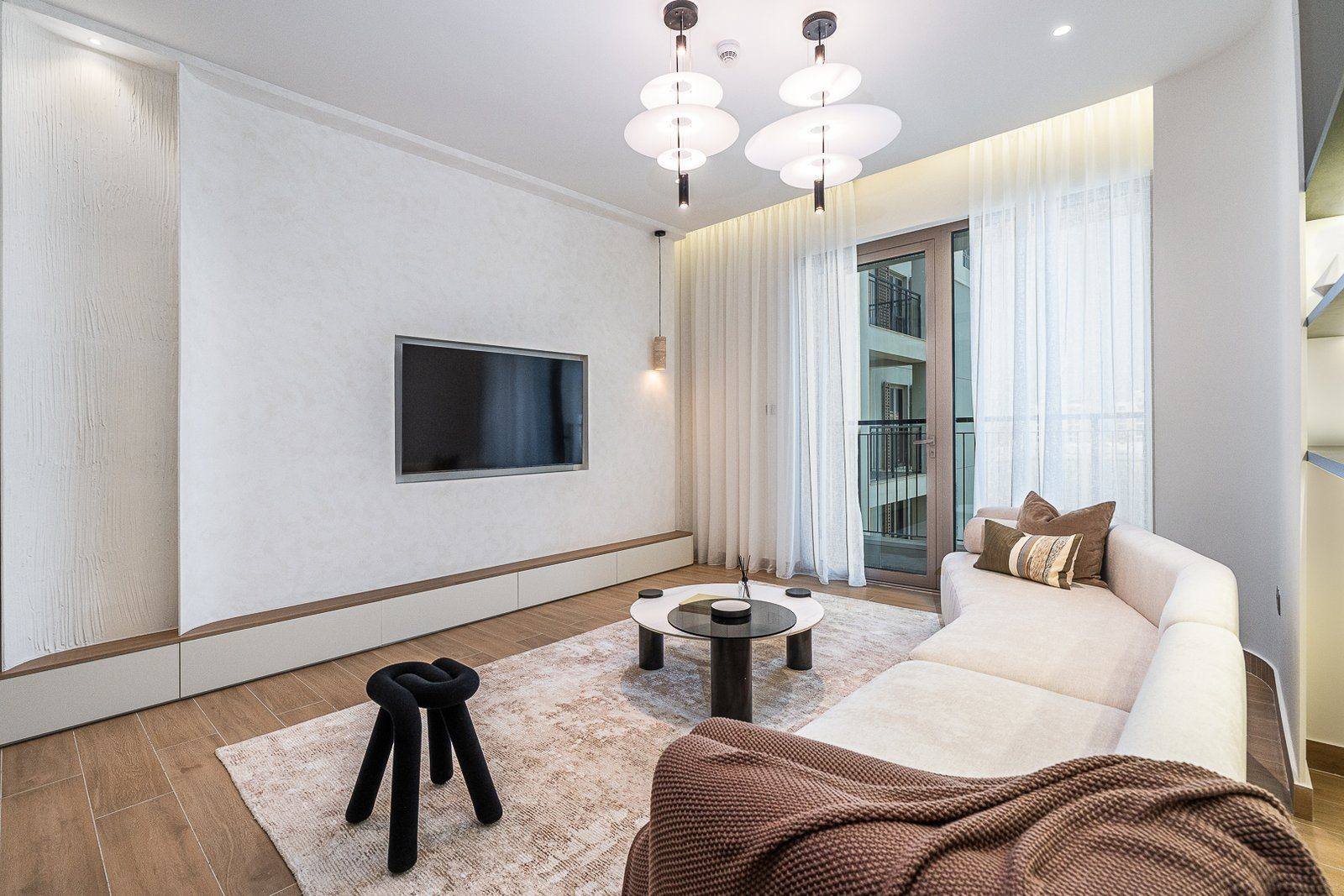
Lined and interlined curtains in wave, pinch-pleat and eyelet headings, made to the window and the track.
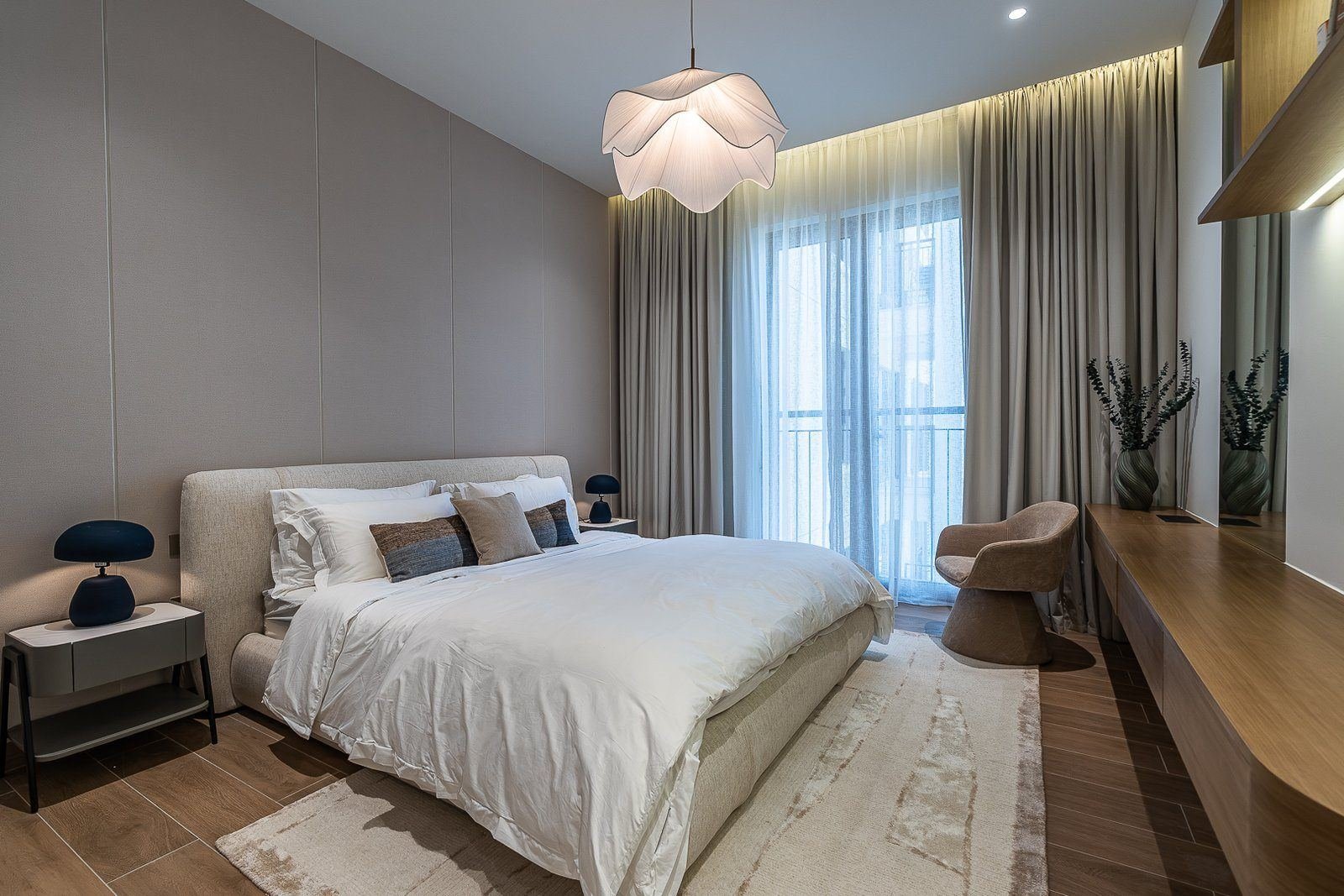
Blackout linings or a separate blackout layer for bedrooms and media rooms, with the returns and overlaps that actually block the light.
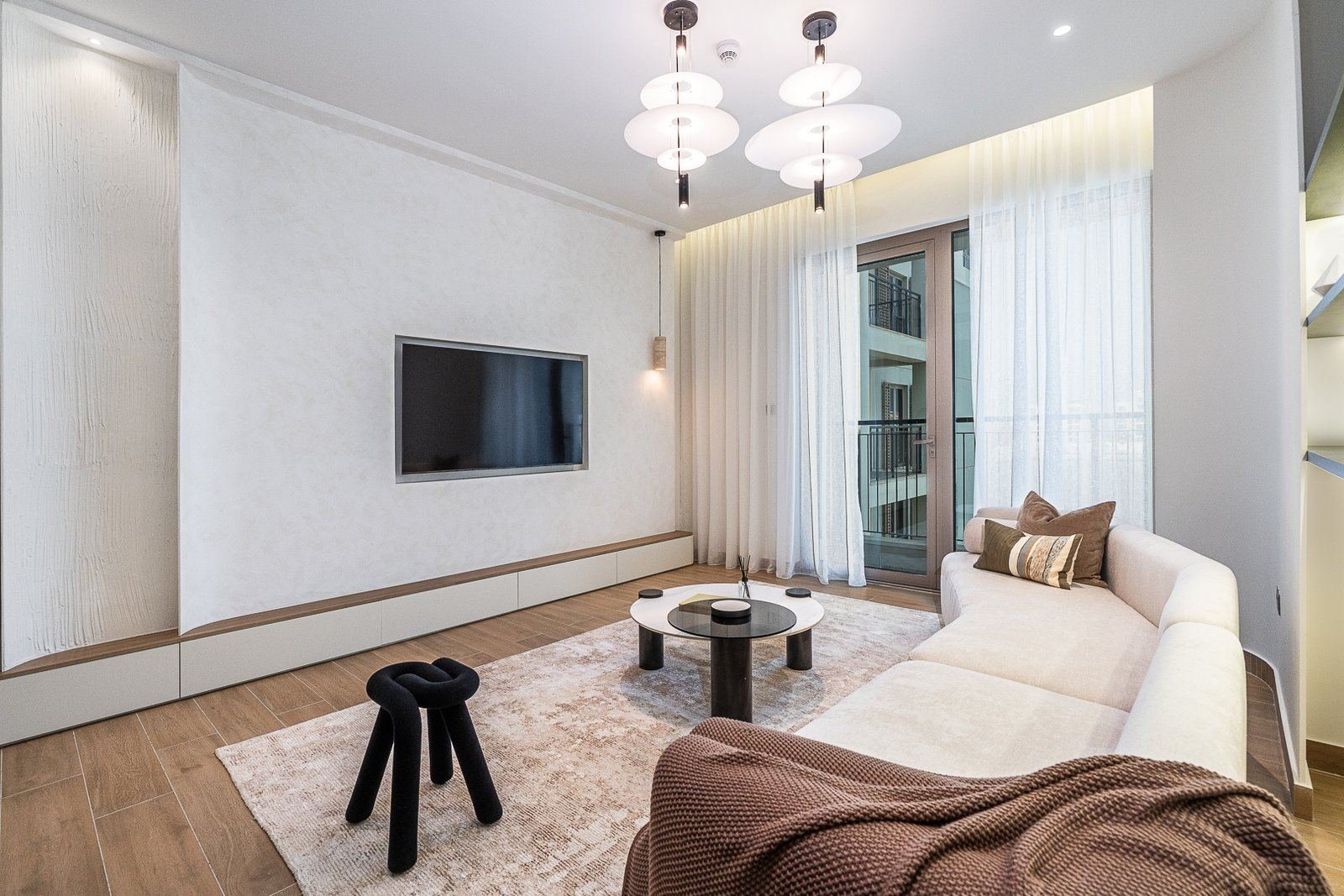
Tracks set into a channel in the gypsum or behind a pelmet, formed while the ceiling is open, so the curtain falls from the ceiling.

Motors wired before the ceiling closes, run from a wall switch, a remote or the home automation system.
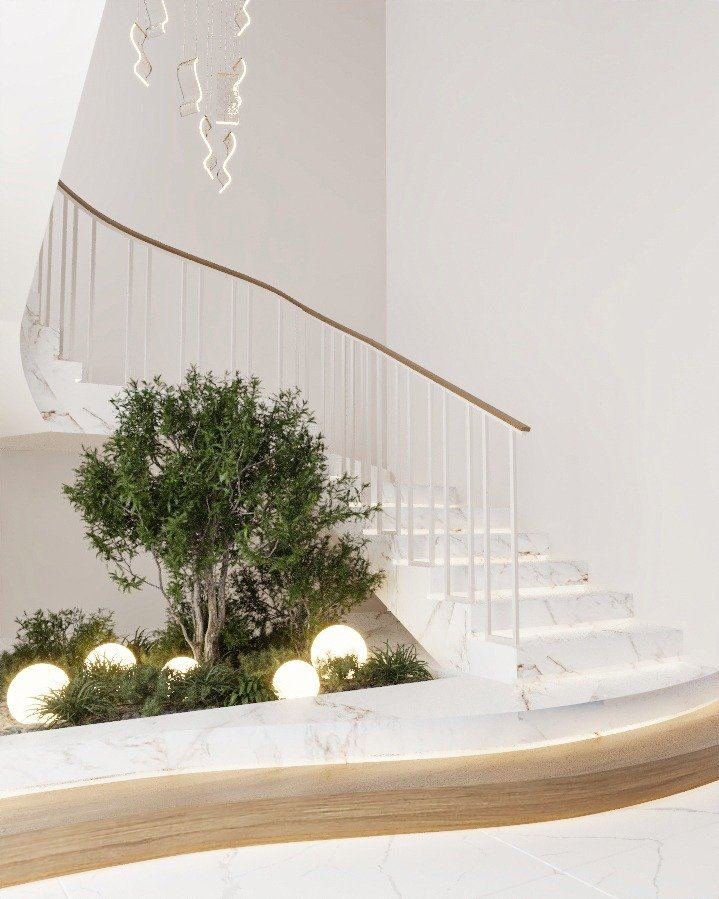
Oversized drops for stair voids and double-height living rooms, in the weight of fabric and track that can carry them.

Flame-retardant curtains and sheers for restaurants, clinics, offices and hotel rooms, to the authority’s requirements.
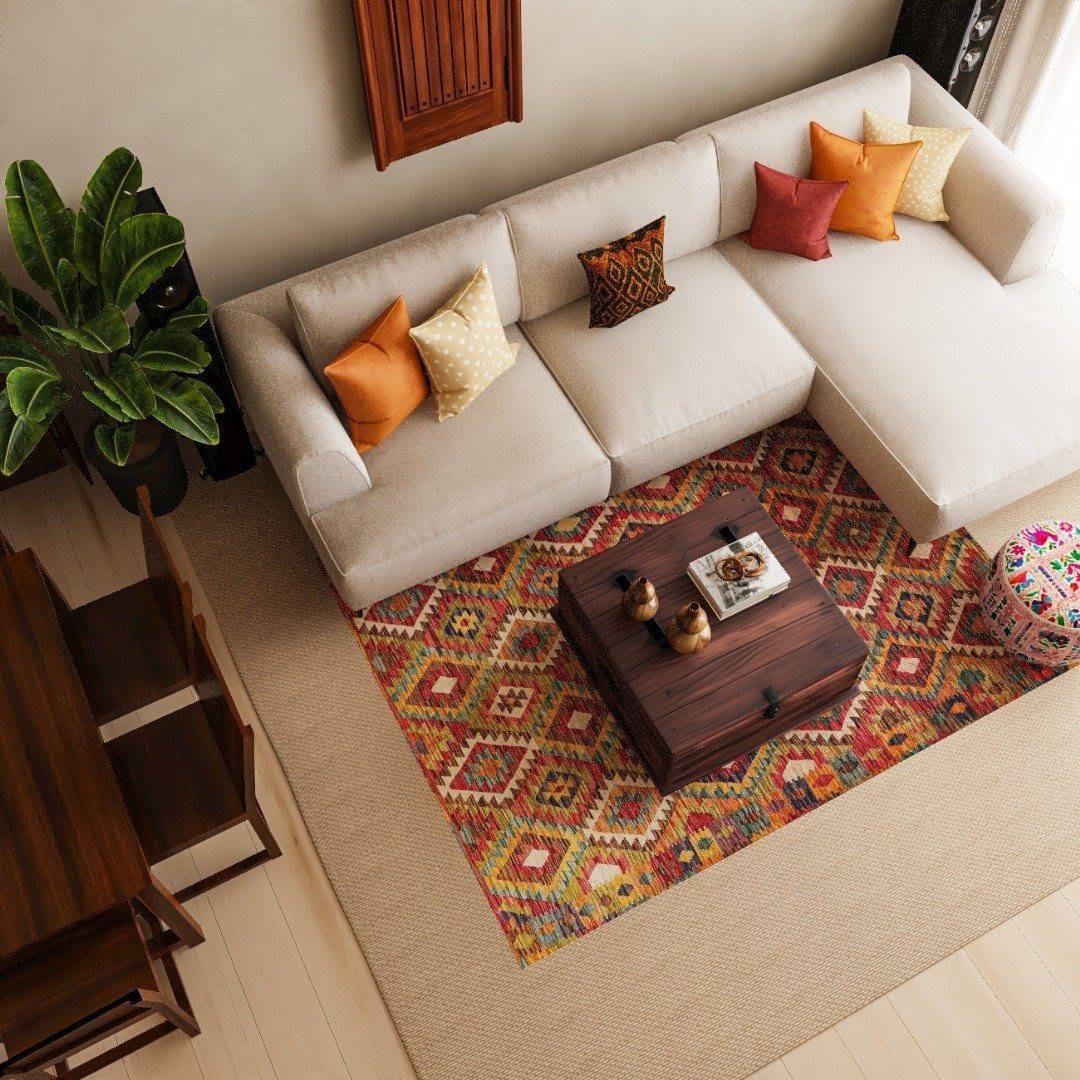
Cushions, bolsters, throws and loose covers in the same fabrics, made by the same team, to tie the room together.
How it works
The track is set out before the ceiling is closed and the curtain is measured after the floor is finished. Doing either at the wrong moment is why curtains in new homes so often look wrong.
Book a measureWe measure every window and door, note which way they open and where the air-conditioning grilles and lights are, and set out the track: how far past the glass it runs so the curtains stack clear, whether it sits in a ceiling channel, behind a pelmet or on the face, and whether it is single, double or triple. On a fit-out this goes on the ceiling drawing.
Fabric, lining and heading are chosen from physical samples hung in the room, in daylight and under the evening lighting, because Dubai sun changes a colour completely. We advise on lightfastness, on whether a fabric needs interlining to hang well, and on which headings suit which tracks.
Channels are formed in the gypsum, tracks fixed to the structure above rather than to the board, and motors wired to a fused spur or the automation system while the ceiling is open. Then the ceiling is closed and painted around a track that was always meant to be there.
Once the floor is laid we measure the finished drop at each window. Curtains are cut, lined, interlined where specified, hand-finished at the hems and leading edges, and made up in our own workshop with the fullness the heading needs.
Our own fitters hang the curtains, dress them into even folds and band them to settle, programme and test any motors, and set the limits so the curtain stops where it should. Sheers are steamed in place.
Recent work
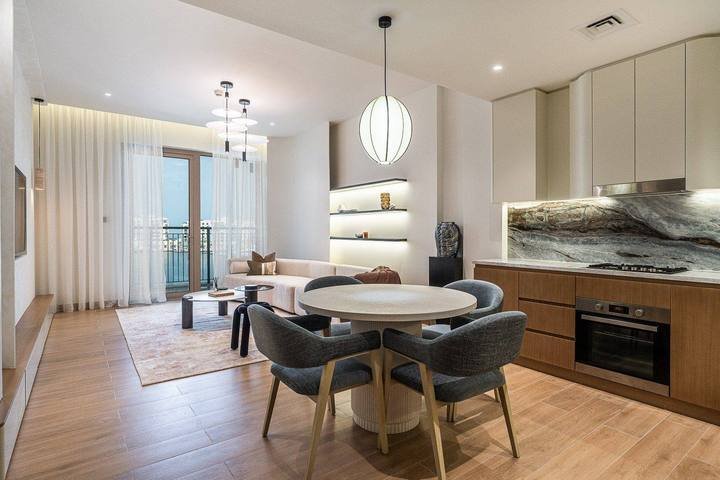
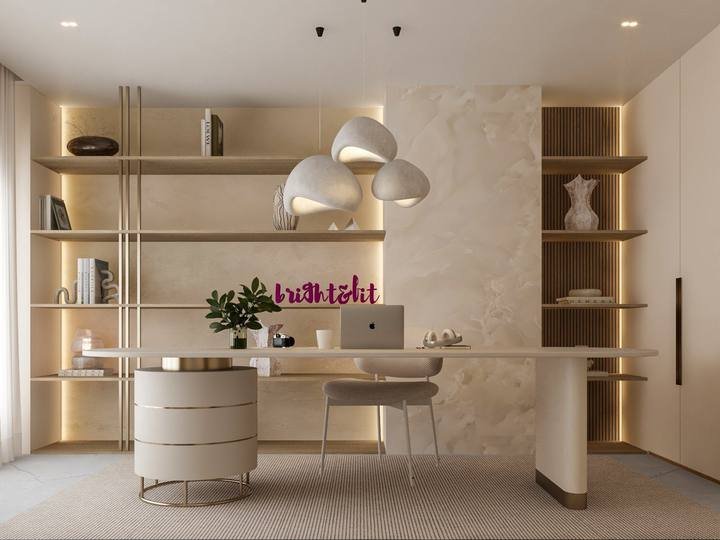
Residences in Meydan, La Mer, Downtown and Abu Dhabi, and a restaurant in JVC.




Specification & cost
Curtains are quoted per window from the measure, with fabric, making, track and installation listed separately. These are the decisions that move the number.
Fabric is priced by the metre and the quantity depends on the width, the drop, the heading and the pattern repeat. A wave heading uses less fullness than a pinch pleat; a large-repeat print wastes more fabric than a plain.
A sheer alone, a sheer with a curtain, or sheer, curtain and blackout on three tracks. Each layer is another set of fabric, making and track.
Lining protects the fabric from the sun and improves the hang. Interlining adds body and insulation and is what makes a curtain look expensive. Blackout lining is the heaviest and needs a track to match.
A face-fixed track is the simplest. A recessed channel needs the ceiling formed around it. A motorised track adds the motor, the wiring and the programming, and a heavy or very wide curtain needs a heavier-duty one.
Double-height drops need fabric widths joined, heavier hems, higher-rated tracks and access equipment to hang. They are the most demanding windows in a villa.
Hand-sewn hems and leading edges, weighted corners and hand-dressed folds are what separate a made-to-measure curtain from a ready-made one, and they are bench hours.
Send photos of the windows and tell us whether the ceiling is still open. We will visit, measure, bring samples to hang in the room, and come back with a track set-out and a price per window.
Common questions
Tracks, fabrics, blackout, motors and timing. If yours is not here, call +971 50 448 3095.
Yes, if the ceiling is still open or is being redone. A channel is formed in the gypsum, the track is fixed to the structure above and the ceiling is finished around it, so the curtain falls from the ceiling with no visible track. If the ceiling is already closed, a pelmet or a face-fixed track with a fascia is the alternative, and we will show you both.
Sun is the main enemy. A fabric with a strong lightfastness rating, protected by a lining, will hold its colour; an unlined silk or a bright cotton facing west will fade in a season. Polyester and polyester-linen blends are the most stable; natural linens and cottons need lining. We hang samples in the window for a few days where it is a close call.
Blackout lining on its own is not enough if light leaks around the edges. The track must run past the window on both sides so the curtain overlaps the wall, the two leading edges must overlap in the centre, and the curtain should return to the wall at each end. A separate blackout layer behind the main curtain on its own track works best, and the sheer stays on the front.
Yes. Motorised tracks are run from a wall switch, a remote, a schedule or the home automation system and integrated with the smart home if you have one. The motor needs power at the track, so it is wired before the ceiling closes on a new fit-out. On an existing ceiling, a battery-powered motor avoids chasing the wall.
Yes. Stair voids, double-height living rooms and full-width sliding doors need fabric widths joined invisibly, heavier hems, higher-rated tracks and access equipment to hang. We measure them individually and specify the fabric weight the track can carry.
Yes. Lightweight sheers lift and twist in the airflow from a ceiling grille unless they are weighted. We use a weighted hem tape or chain and keep the track clear of the grille throw where we can. Wave headings help, because the folds are held by the track rather than the fabric.
Twice. The track is set out before the ceiling is closed. The curtain drop is measured after the floor is laid and skirtings are on, because a floor finish changes the drop. Measuring the drop early is the usual reason hems float or pool.
Yes. Commercial spaces need flame-retardant fabrics or treatments to meet Civil Defence requirements, and sheers that can be cleaned on a schedule. We supply the certificates with the curtains and coordinate the track with the commercial fit-out.
That is the advantage of one workshop. The curtain fabric is chosen against the sofa fabric, the headboard and the wall colour, and cushions and throws are made from the same bolts, so the room is one scheme rather than four suppliers’ guesses.