Authority approvals & compliance
Developer NOCs, building and mall submissions, and the permit from the authority that covers your area, with fire, utility, food safety and clinic reviews coordinated alongside. For homes and commercial units, carried from submission to completion by the team that also does the work.
Two villas can look like the same job and still follow different routes. Dubai Municipality, the Dubai Development Authority, Trakhees and DMCC each issue permits for their own areas, and most communities also need the master developer’s NOC first. A villa in a Nakheel community such as Al Furjan goes through Trakhees with Nakheel-stamped drawings; an office in JLT goes through DMCC. Get the route wrong and the application comes back.
We handle approvals as part of our design and build work, and on their own when you have another contractor or a design that needs taking through. We confirm the route for your property at the site visit rather than guessing from the community name. The difference between us and an approvals consultant is that we also have to build what is approved, so the drawings are prepared to be built from, not only to be submitted.
Who approves what
Rarely just one. A typical project passes through several of these, in sequence, each with its own drawings and documents.
Emaar, Nakheel, Meraas, Dubai Holding, Nshama, DAMAC and other master developers, each with its own requirements.
Issues building permits for structural, facade, MEP and wet-area work in its own areas.
The PCFC authority for areas such as Palm Jumeirah and Discovery Gardens. Nakheel communities such as Al Furjan go through Trakhees with Nakheel-stamped drawings.

JLT is under DMCC; the Dubai Development Authority and other free-zone authorities issue permits for their own areas.

Fire and life-safety drawings and the completion certificate a commercial unit needs to open, coordinated as part of the project.
Load increases, new distribution boards and relocated wet areas, with the submissions coordinated as part of the project and planned early.

Review of the kitchen layout, finishes, hand-wash and extraction before a food business can be licensed.
Health-authority review of the room schedule, sterilisation flow and finishes before a clinic can be licensed.
Tower NOCs, fit-out deposits, service-lift bookings, working hours and the contractor documents they require.

Staged concept, detailed and technical submissions against the fit-out guide before the mall issues a permit.

Each emirate has its own municipality and master developers, and its own route, which we confirm at the site visit.
Inspections, as-builts and the certificates needed to occupy, trade, connect services and recover the deposit.
The route
They stack. Skipping one, or submitting to the wrong body, is how a fit-out loses time before it starts.
Ask which route appliesWho covers the land decides who approves the work. Some cases are clear-cut: JLT is under DMCC, and Palm Jumeirah and Discovery Gardens are under Trakhees. For other communities we confirm the route at the site visit, before a line is drawn, rather than guessing from the community name.
A tenant needs the landlord’s written consent. An apartment needs the owners association or building management NOC, with its deposit and working-hours conditions. A mall unit passes a staged design review against the fit-out guide. Most villas and towers in master-planned communities need the developer’s NOC before anything goes to the authority, and each developer has its own checklist.
Structural, facade, MEP and wet-area work needs a permit from the authority for the area. Anything touching sprinklers, detection, emergency lighting or escape routes needs a fire and life-safety submission, and load or wet-area changes need a utility submission; DEWA and Civil Defence submissions are coordinated as part of the project. Sector reviews run alongside: food safety for F&B, health-authority design review for clinics.
Inspections, utility connection, as-built drawings and the completion certificates. For a tower apartment this is what returns the fit-out deposit; for a commercial unit it is what lets you trade; for a clinic it is what the licence depends on. An approvals consultant typically leaves at permit. We are still on site, so close-out is ours too.
Recent projects
Al Furjan, Jumeirah, JVC, JLT, Sports City, Al Quoz and Abu Dhabi.
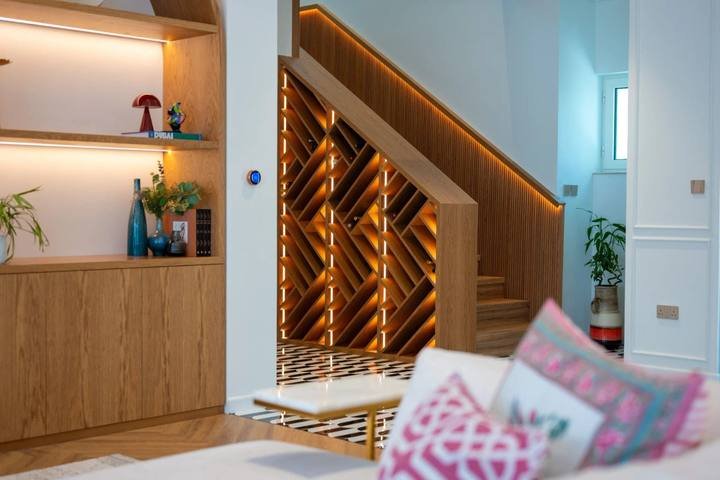
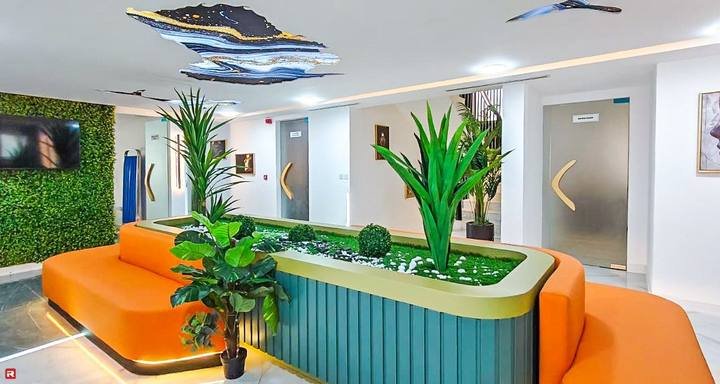


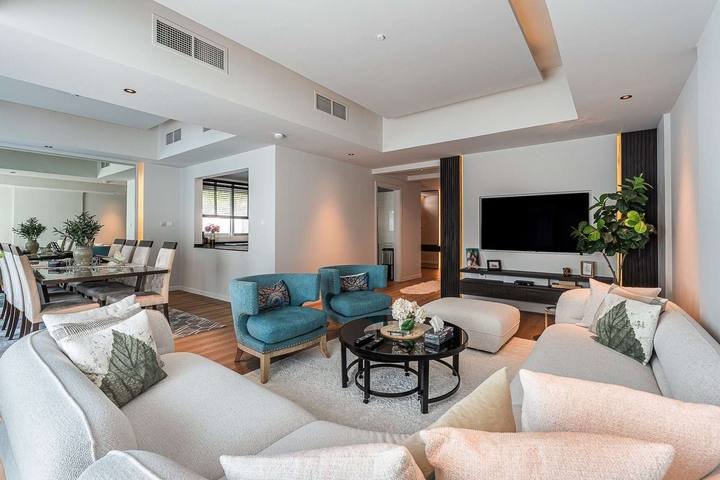


Scope & programme
We cannot shorten an authority’s review. What we can do is send a complete application, to the right body, with everything it will ask for, to avoid it going round twice.
A paint-and-floor refurbishment may need only the developer or building NOC. A relocated kitchen adds the authority permit and a utility submission. A restaurant adds food safety and fire. Each layer is a submission and a wait.
Each authority and developer has its own requirements for sheets, stamps and who signs. A set prepared for one body is often redrawn for another, so we check the requirements before the set is drawn.
Many developers only accept contractors registered with them. We are registered with six of Dubai’s major developers, so in those communities the contractor side of the NOC is already in place.
Touching either brings a structural engineer’s drawings, a fuller permit route and often a developer design review. Some communities don’t allow facade changes at all, which we tell you before you design around one.
Some bodies accept simultaneous submissions; some insist on the one above being approved first. We run in parallel where the rules allow and put joinery into production in our Al Quoz workshop during the wait.
Most delay is an incomplete set going round twice. Title deed, tenancy contract, trade licence, drawings and the right fee paid to the right account: we check the list before submission.
With the address and a line on the scope, we can confirm which authority covers it, which consents sit above it and what each will ask for. If you already have a design or a contractor, we can take the approvals on their own.
Common questions
Authorities, NOCs, fire approvals and what happens if you skip them. If yours is not here, call +971 50 353 8845.
Almost always, at some level. Most master-planned communities require a developer NOC before any work; towers require a building management NOC; malls require a design review. Structural, facade, MEP and wet-area changes then need a permit from the authority that covers the area, and changes to fire systems need a fire and life-safety approval. A refurbishment that keeps the layout and services usually needs less. We confirm the route at the site visit.
The area they cover. Dubai Municipality, the Dubai Development Authority, Trakhees and DMCC each issue permits for their own areas. Trakhees is part of the Ports, Customs and Free Zone Corporation (PCFC) and covers areas such as Palm Jumeirah and Discovery Gardens; Nakheel communities such as Al Furjan go through Trakhees with Nakheel-stamped drawings. For any other community, such as Dubai Hills Estate, we confirm the authority at the site visit.
Several. JLT is under DMCC, and the Dubai Development Authority issues permits for its own areas. Other free zones have their own authorities too. Each sets its own submission requirements, and fire and life-safety approval runs alongside. We confirm the authority and its requirements for your unit before drawings start.
Usually because something is missing or does not match the developer’s requirements: the wrong drawing set, missing documents, a scope the community does not allow such as a facade change, or the fee paid to the wrong account. We are registered with six of Dubai’s major developers: Emaar, Nakheel, Meraas, Dubai Holding, Nshama and DAMAC, and check each developer’s list before we submit.
Whenever the fire and life-safety systems are touched: sprinkler heads moved under a new ceiling, detection, emergency lighting, exit signage, escape routes, kitchen suppression. That covers almost every commercial fit-out and some residential ones. The completion certificate at the end is what lets a commercial unit open. We draw the fire layout into the design from the start, and the Civil Defence submission is coordinated as part of the project.
The community or building can stop the work, fine the owner and require it to be reinstated; the authority can refuse a completion certificate; a commercial unit cannot trade; and an unapproved alteration can surface when you come to sell. Retrospective approval is possible in some cases and is always slower and more expensive than doing it first.
Yes. We can take the drawings through the developer and the authority on their own, and will tell you if something in the design looks unlikely to be accepted or will not build as drawn. If you would rather have one team for approvals and works, we can discuss delivering the project as well.
Each emirate has its own municipality, utility provider and master developers, so the route is different from Dubai’s and we confirm it for each project. The Abu Dhabi page covers our work there, and recent work in Sharjah includes the Platform Health Club.
New distribution boards, load increases, relocated kitchens and bathrooms and new connections all need DEWA, and it is the approval most often left too late. DEWA submissions are coordinated as part of the project and planned early, alongside the authority permit. See MEP works.