Flooring & tiling
Porcelain, marble, engineered timber, SPC and LVT for villas, apartments, offices and shops — with the screed, levelling, waterproofing and falls done before the first tile goes down, and the skirting, thresholds and transitions detailed from the start.
Hollow tiles that ring when you tap them, lippage you can feel barefoot, grout lines that crack along a hidden movement joint, a shower that drains towards the door, timber that cups a year after it went down. None of these is a problem with the tile or the board. They are problems with the bed it was laid on: a screed that was not flat, a slab that was not dry, a wet area that was never tanked, a large-format porcelain laid without levelling clips because the tiler was paid by the square metre.
We lay floors as part of our own renovations, where a hollow tile comes back to us as a snag. So the subfloor is surveyed and priced honestly before the finish is chosen, wet areas are tanked and given proper falls, large formats are laid on a levelling system with the adhesive allowed its full cure, and the skirting, nosings and thresholds are part of the design rather than an afterthought. The same crew and the same standard are available as a standalone package.
What we lay
Each has its own preparation and its own failure mode. We specify room by room.
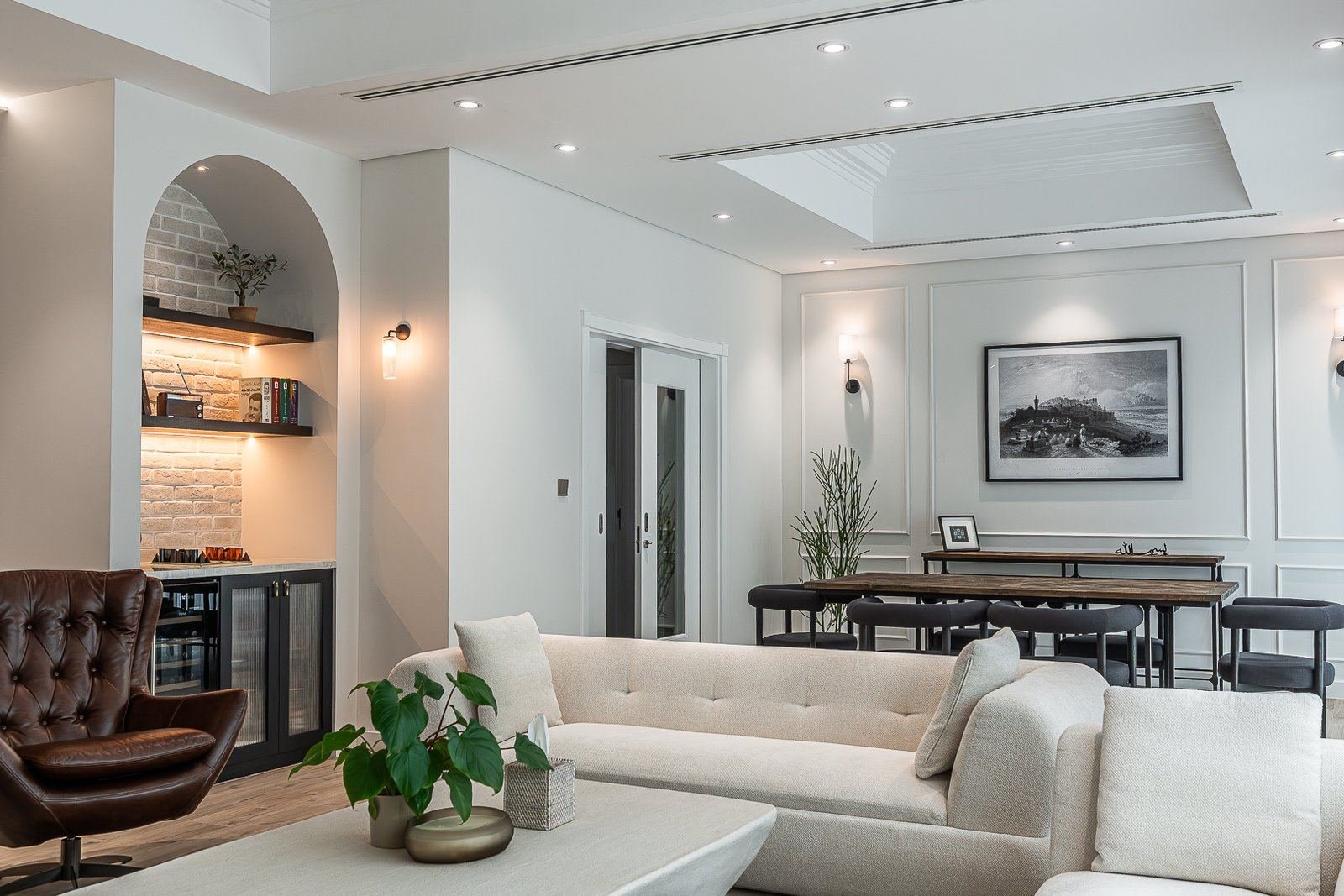
Standard and large-format porcelain on a levelling system, with cuts set out from the sightlines and matched grout.
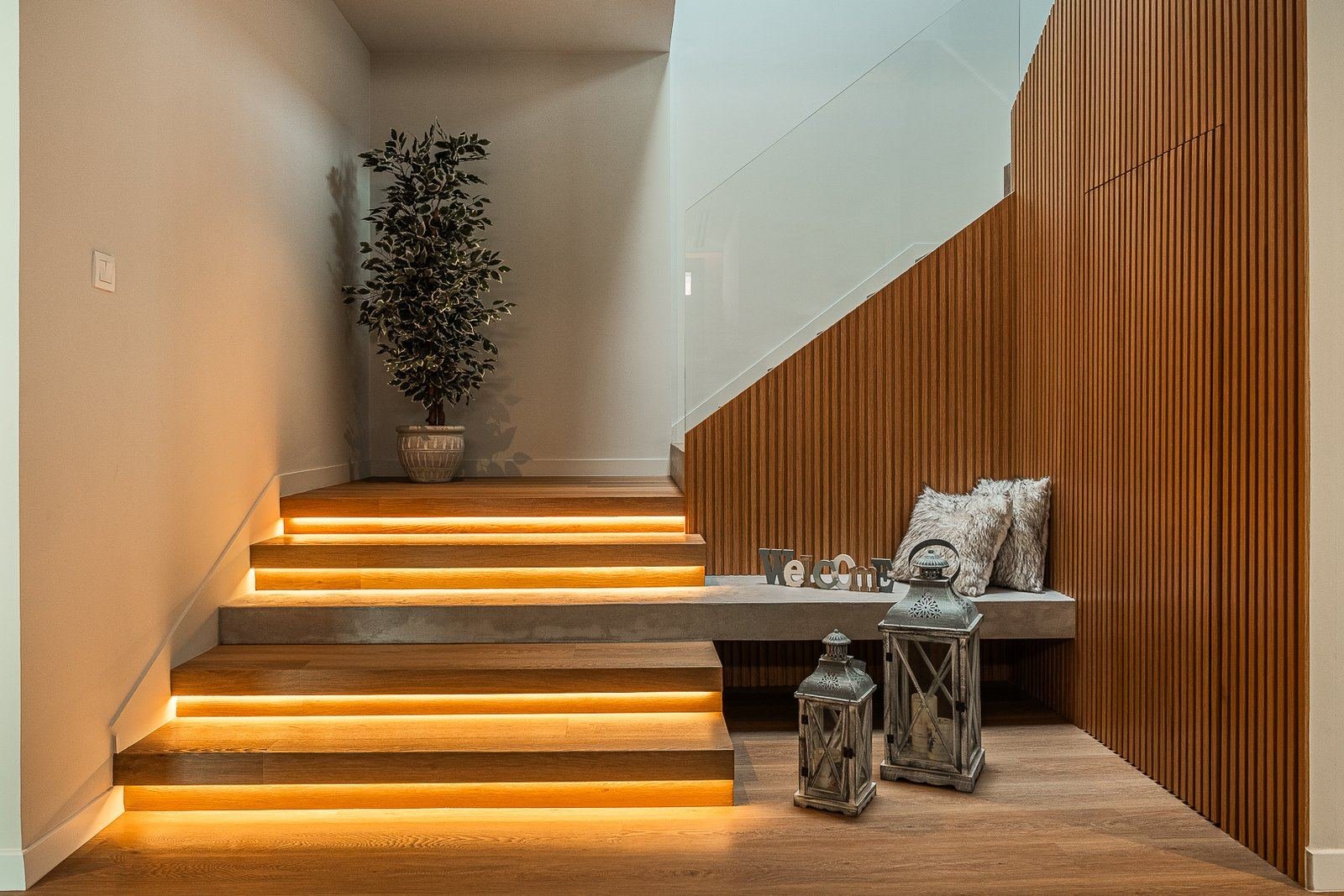
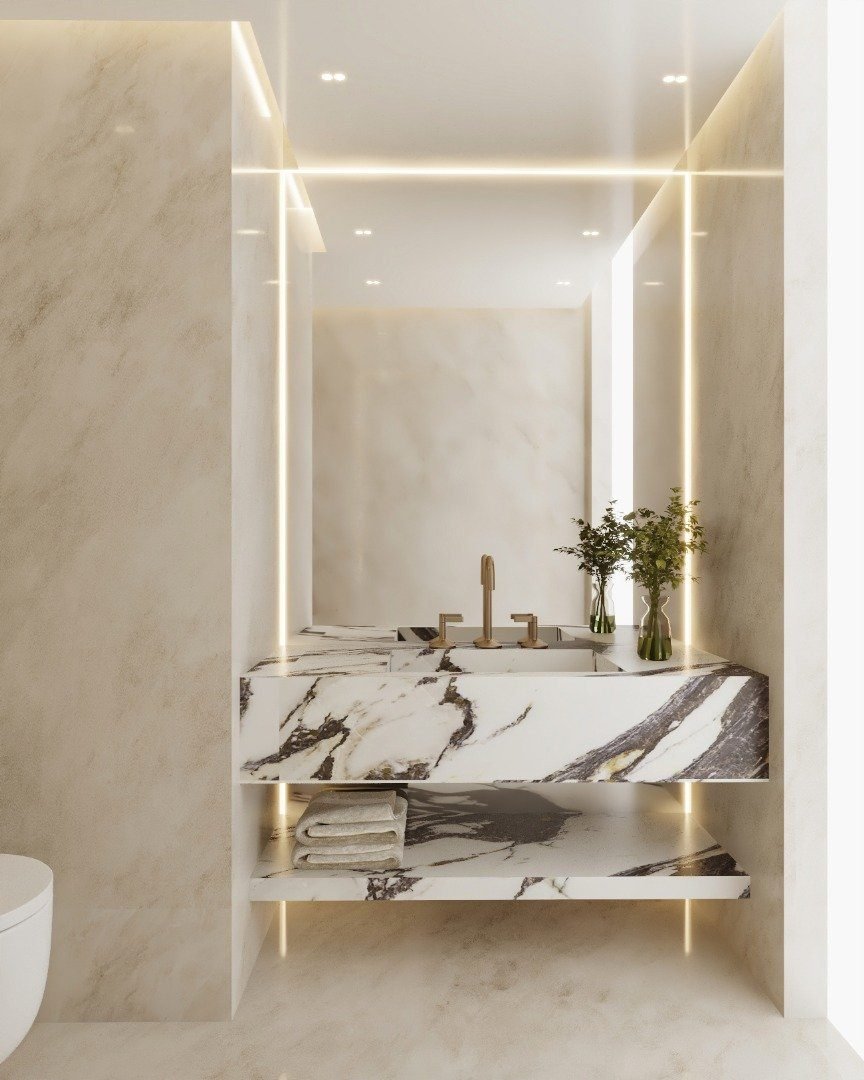
Marble, travertine and limestone laid on a prepared bed, sealed, and honed or polished in place. See Golf Place.
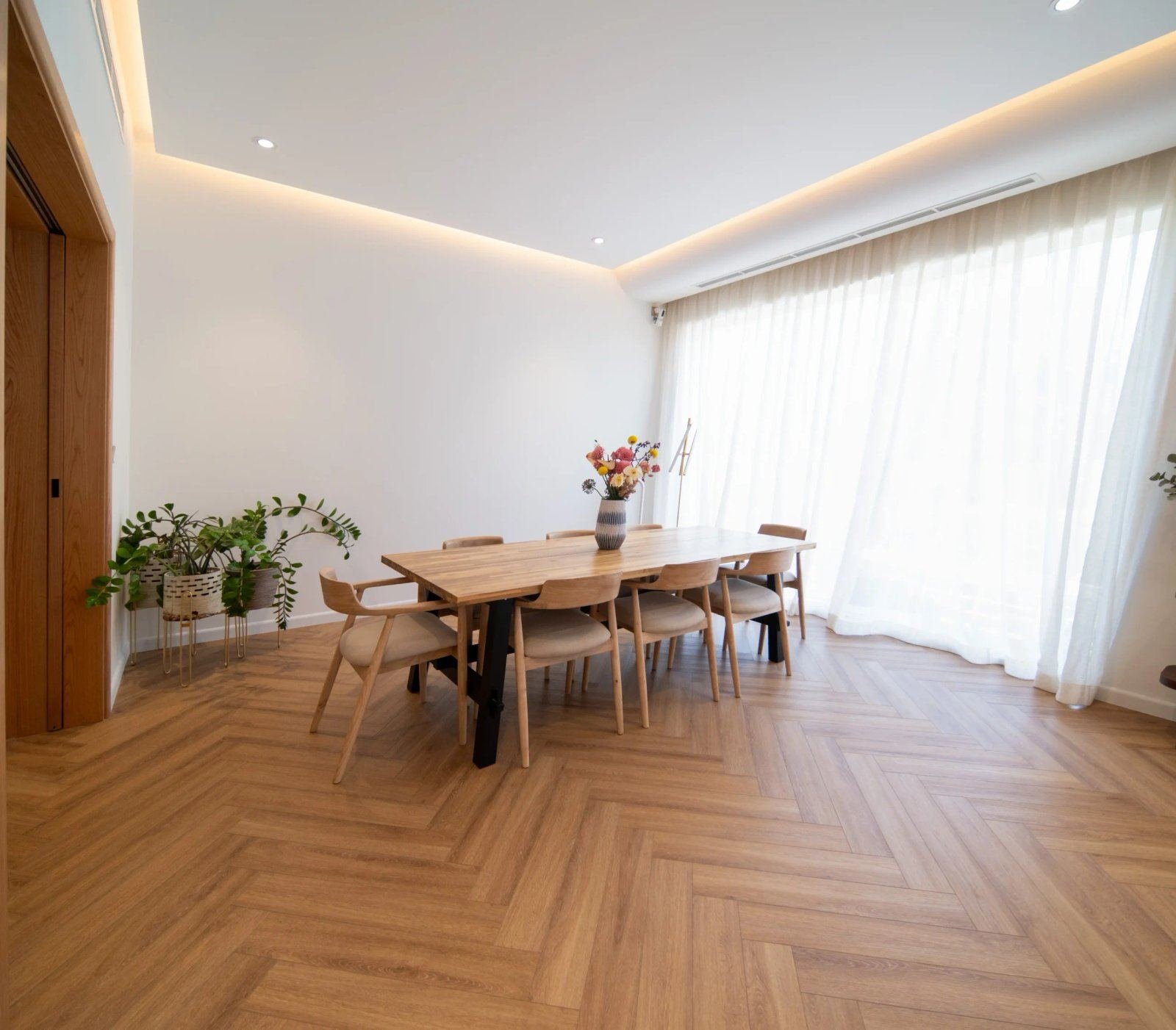
Boards and parquet patterns over a moisture-tested, levelled subfloor with the right underlay and expansion gaps.
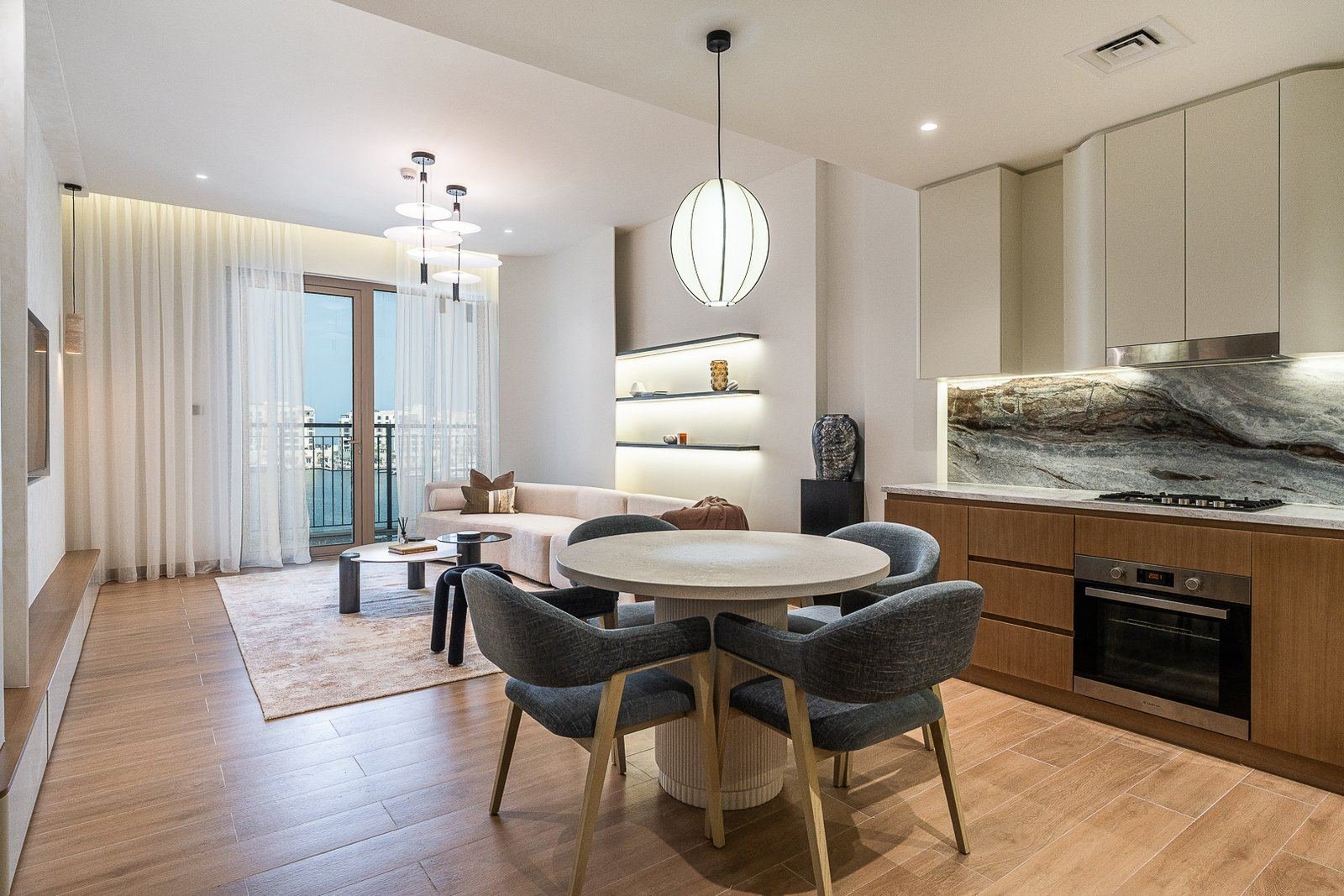
Rigid-core vinyl for apartments, rentals and offices, over a flat subfloor with acoustic underlay where the building requires it.

Tanking, falls to the drain and threshold details in bathrooms, kitchens and balconies, done before a single tile is laid.

Slip-rated porcelain and stone for terraces and pool surrounds, with drainage and movement joints. Decking has its own page.
Process
Most of the work in a good floor is invisible once it is finished. This is the sequence on every job.
Ask about your floorWe check the existing screed or slab for level, hollow spots, cracks and moisture, and whether the old floor can be overlaid or must come up. In a tower we also read the building’s rules: many prohibit hard flooring above another unit without an acoustic underlay, and the facilities manager may need to approve the specification. In a villa the developer NOC is usually only needed if the scope goes beyond finishes.
The old floor is removed or, where it is sound and the heights allow, overlaid. Cracked or hollow screed is cut out and replaced. New screed or a self-levelling compound brings the floor flat to the tolerance the finish needs — large-format porcelain and timber are unforgiving of a floor that is out by a few millimetres. In bathrooms, kitchens, balconies and terraces, a tanking membrane goes down and falls are formed to the drain before anything else, because once the tile is on there is no fixing it.
We set out from the sightlines — the entrance, the main window, the kitchen run — so full tiles sit where you look and cuts fall behind doors and under units. Large formats go on a levelling clip system to eliminate lippage. Timber is acclimatised in the room before laying and given its expansion gap. The adhesive is allowed its full cure before grouting, which is the step most often rushed.
Grout in a matched colour, stone sealed, skirting and stair nosings fitted, level thresholds between materials, and movement joints where the floor needs to breathe. Then the floor is boarded over and protected until the painters, the joiners and the furniture have all been through, so what you see at handover is what we laid.
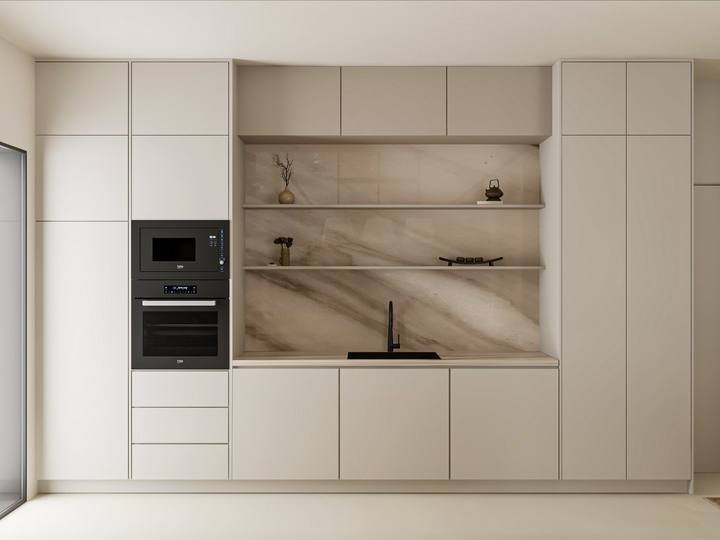
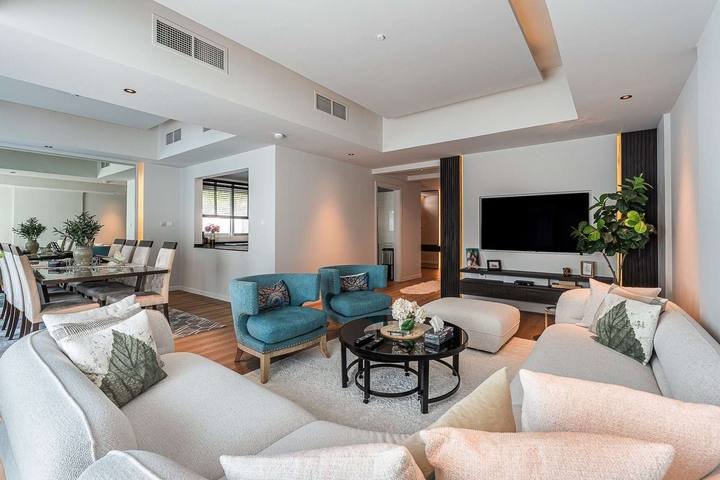
Recent floors
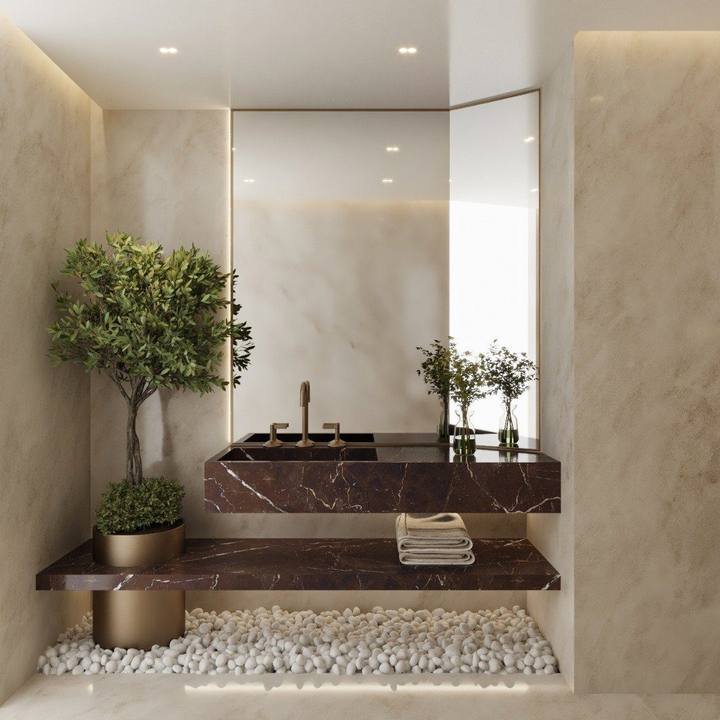
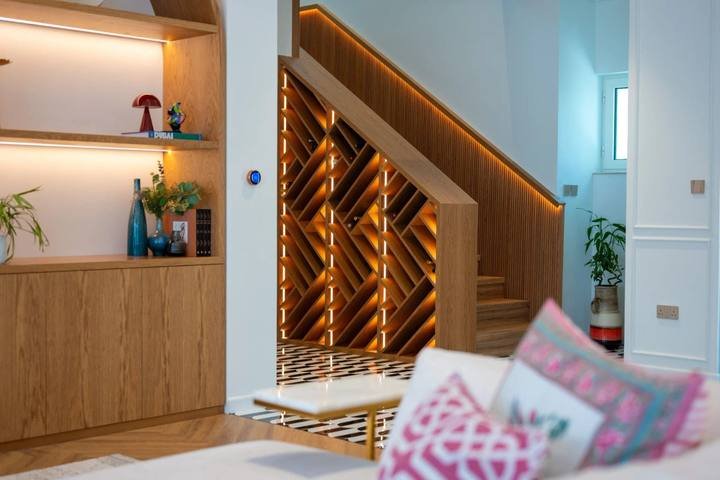
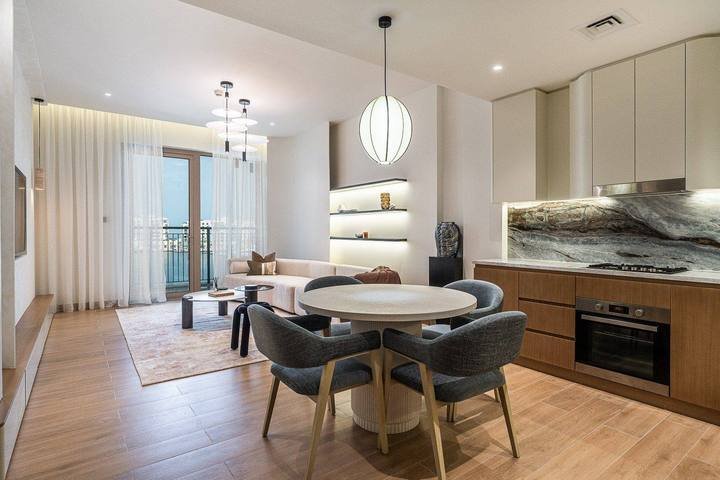
Stone, porcelain and timber in villas and apartments.


Scope & programme
We price after surveying the subfloor rather than per square metre over the phone, because the bed is where quotations differ most. These are the things that move it.
Laying over a sound existing floor saves removal, disposal and screed, but raises the level and affects doors and thresholds. Removing it costs more and gives a clean bed. The survey decides.
A flat, dry, sound screed needs little. A cracked, hollow or uneven one needs cutting out and relaying or a levelling compound, and that line varies more than the tile does.
Large-format porcelain and natural stone take longer to lay and need levelling systems and more skilled hands. Stone also needs sealing and sometimes in-situ polishing. SPC and LVT are quickest.
Tanking, falls, drains and threshold details make a bathroom floor far more work per square metre than a bedroom. Moving a drain brings DEWA and a permit with it.
Herringbone, chevron and diagonal layouts cut more and waste more than straight runs. Book-matched stone needs slabs selected and laid in order. Both move the number.
Flooring an empty property is fastest. Flooring an occupied one means moving everything out of each room in turn and living with the dust of removal, which is why it is the upgrade most worth doing before you move in.
Tell us the property and the floors you have in mind. We will check the existing bed for level, hollows and moisture, read the building’s rules, and come back with a quotation that prices the preparation as well as the finish.
Common questions
Materials, subfloors, wet areas and building rules. If yours is not here, call +971 50 448 3095.
Porcelain and natural stone handle the heat, the sand and the cleaning regime best and stay cool underfoot, which is why they dominate living areas. Engineered timber works well in bedrooms and studies in an air-conditioned home provided the subfloor is dry and the boards are acclimatised; solid timber is a risk. SPC and LVT are practical in apartments and rentals. We specify room by room rather than one material throughout.
Usually, with conditions. Many towers prohibit hard floors above another unit unless an acoustic underlay of a specified performance is used, and the building management may need to approve the specification before issuing the renovation NOC. We read your building’s rules before quoting. See our apartment renovation page for how tower approvals work.
If the existing floor is sound, flat and well bonded, often yes, and it saves removal and disposal. It raises the floor level, which affects door clearances, thresholds and the step at the entrance, and it is not suitable where the old floor is hollow or cracked. We tap-test and level-check the existing floor at survey and tell you which route makes sense.
Almost always because of the bed: adhesive not spread fully under the tile, a screed that was dusty or hollow when the tile went down, no movement joints across a large area, or grouting before the adhesive cured. Large-format porcelain is especially unforgiving. We back-butter large formats, use levelling clips and allow full cure before grouting, which is why our floors do not ring.
A tanking membrane over the screed, turned up the walls and sealed around the drain and the door threshold, with the floor formed to fall towards the drain before tiling. A wet area that is tiled without tanking will leak into the room below eventually, and in a tower that becomes a dispute with your neighbour. It is the one stage we never skip, and it is detailed on our bathroom fit-out page.
Either. We can specify and supply from the ranges we trust, or lay what you have chosen and bought, provided we see a sample first to confirm it suits the room and the bed. Natural stone we prefer to select ourselves because slab quality and matching vary, and we are selecting the pieces you will walk on.
In a villa, finishes alone usually do not need a developer NOC, but the community may require one if the work is part of a larger renovation. In a tower, the building management’s renovation NOC applies, and the acoustic rule above. Moving a drain, or changing a floor level in a way that affects the structure, adds an authority permit. We tell you which applies at survey.
Yes, and we think they are part of the floor rather than extras. Matching skirting in tile, stone or timber from our own Al Quoz workshop, stair nosings, level thresholds between materials and movement joints are drawn and priced from the start, because they are what you see at every doorway.
Yes. We deliver across the UAE, including Abu Dhabi and Sharjah. Recent work includes The Dahlia in Abu Dhabi.