Property upgrade before move-in
Developer-finish upgrades for new villas, townhouses and apartments in the window between handover and occupation or letting — flooring, kitchens, wardrobes, bathrooms, lighting and paint, with the developer NOC timed right after handover and the work sequenced before a single piece of furniture arrives.
A new villa or apartment is handed over with the developer’s standard finish: the tile everyone in the community has, a kitchen chosen to a budget, white walls, a lighting layout that was never designed around furniture. Most owners live with it for a year, then renovate around sofas, beds and a family. Everything is slower, dustier and more expensive than it would have been in the empty unit, and the floor that was going to be replaced anyway has been protected, cleaned and walked on for twelve months.
We work the gap instead. We join your handover walk-through, split what the developer owes you under snagging from what you want upgraded, submit for the developer’s NOC the moment the handover documents are issued, and run the upgrades in trade order through an empty property, with kitchens, wardrobes and panelling made in our own Al Quoz workshop while the NOC runs. You move in once, into the finish you actually wanted. Investors do the same and list the unit on the day the builder’s clean is done.
What owners upgrade before moving in
In rough order of how much harder each becomes once the furniture is in.
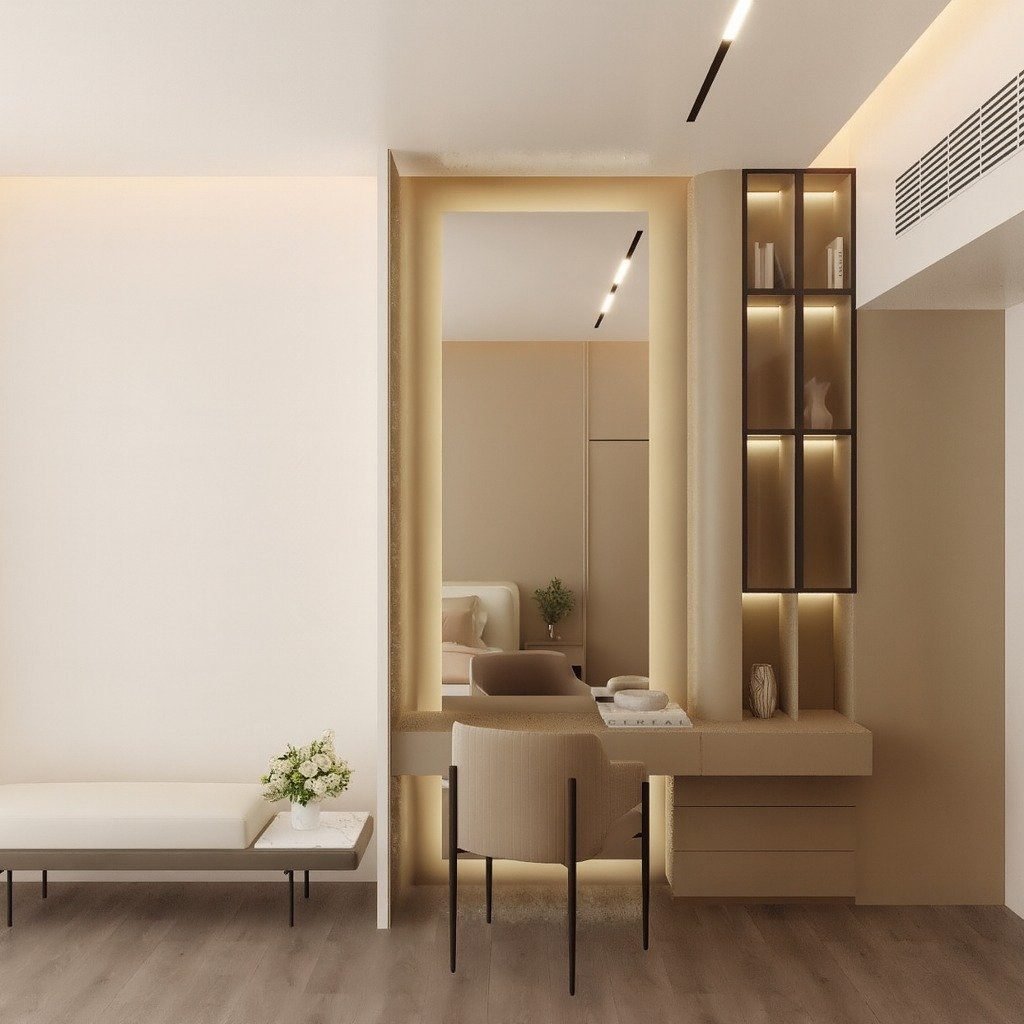
Large-format porcelain, marble or timber laid through an empty property, the one upgrade that is genuinely painful to do later.
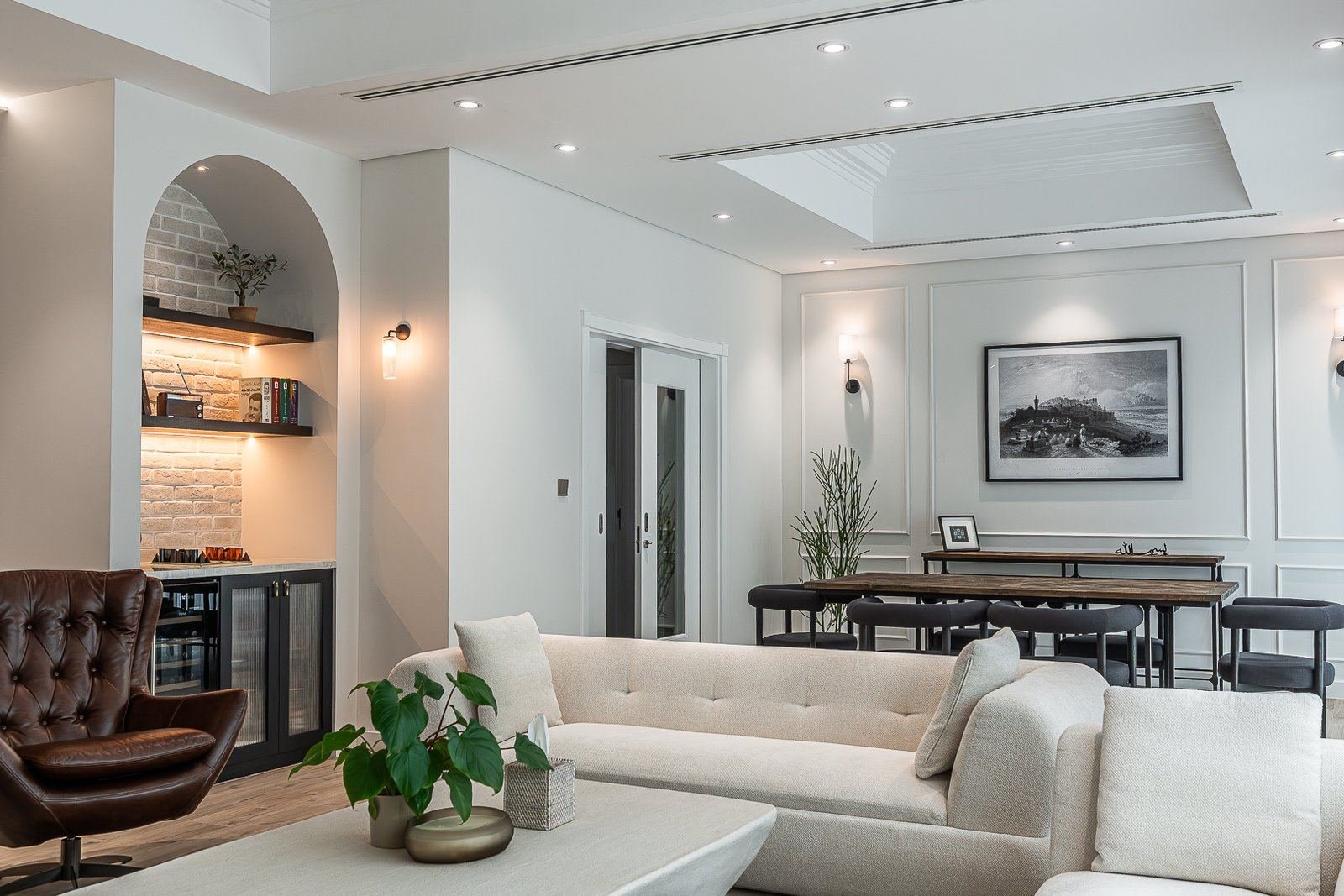
Replacing or re-facing the developer kitchen with cabinetry from our workshop, new worktops and the appliances you chose.
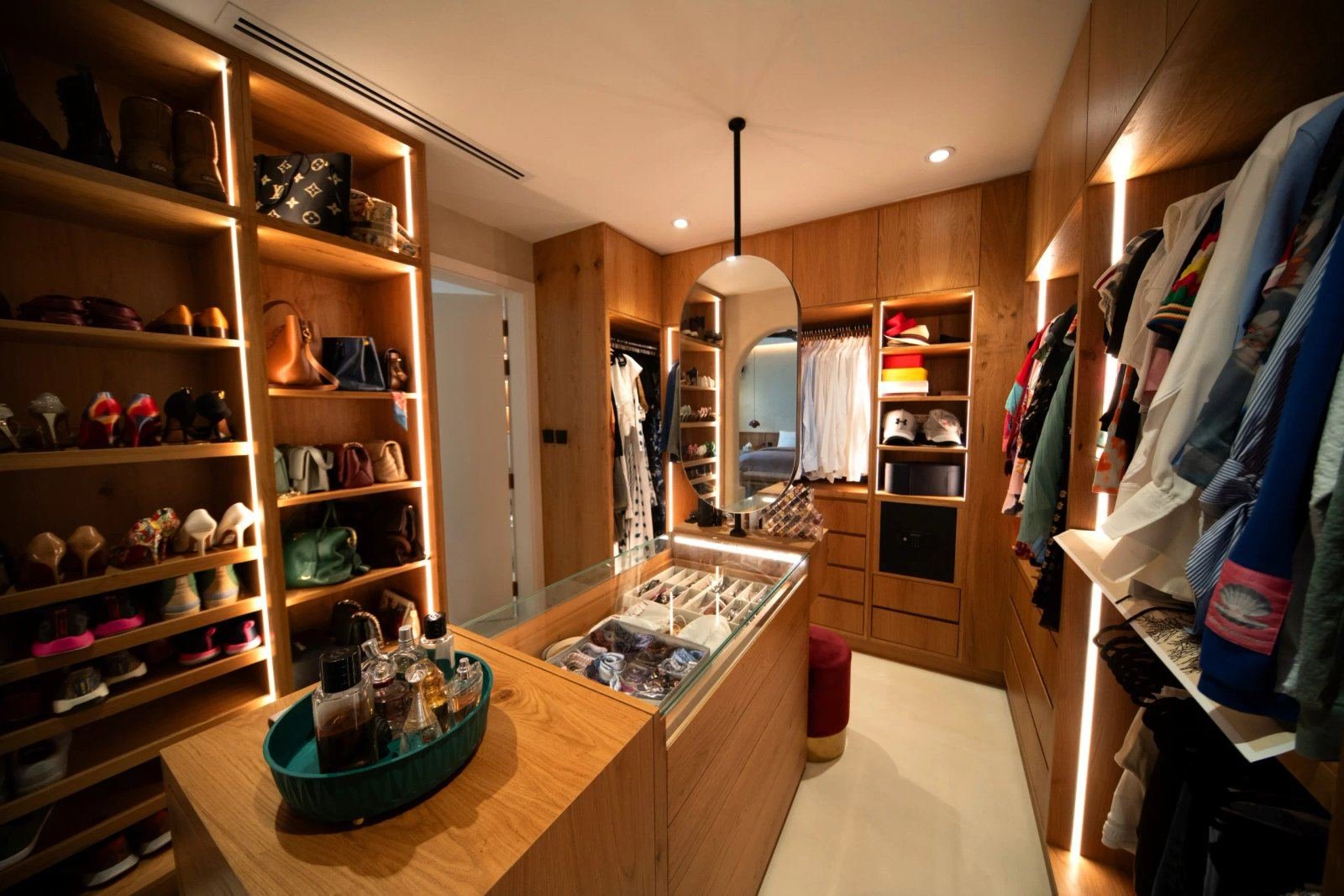
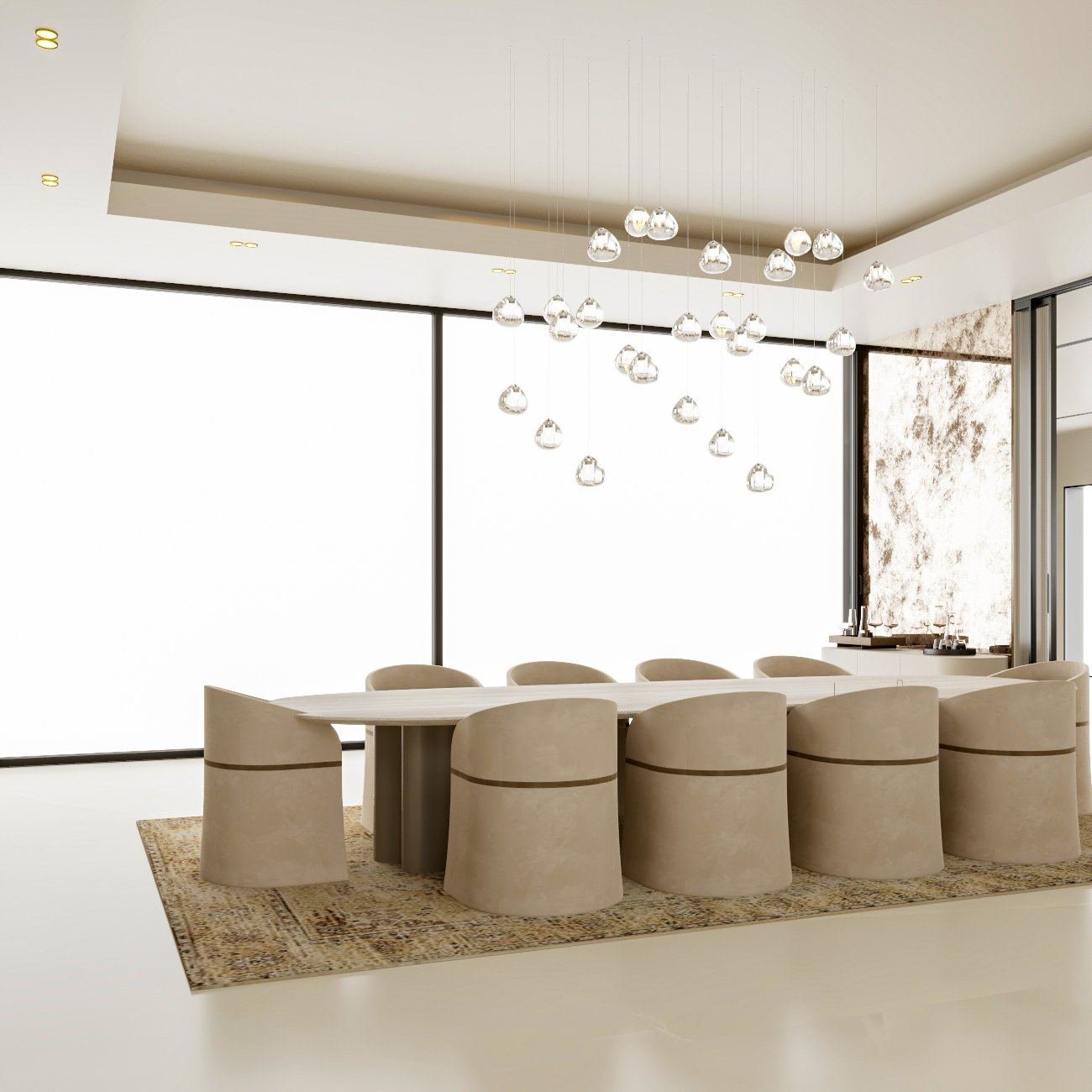
Built-in wardrobes and walk-in dressing rooms fitted to the exact room before the beds are delivered.
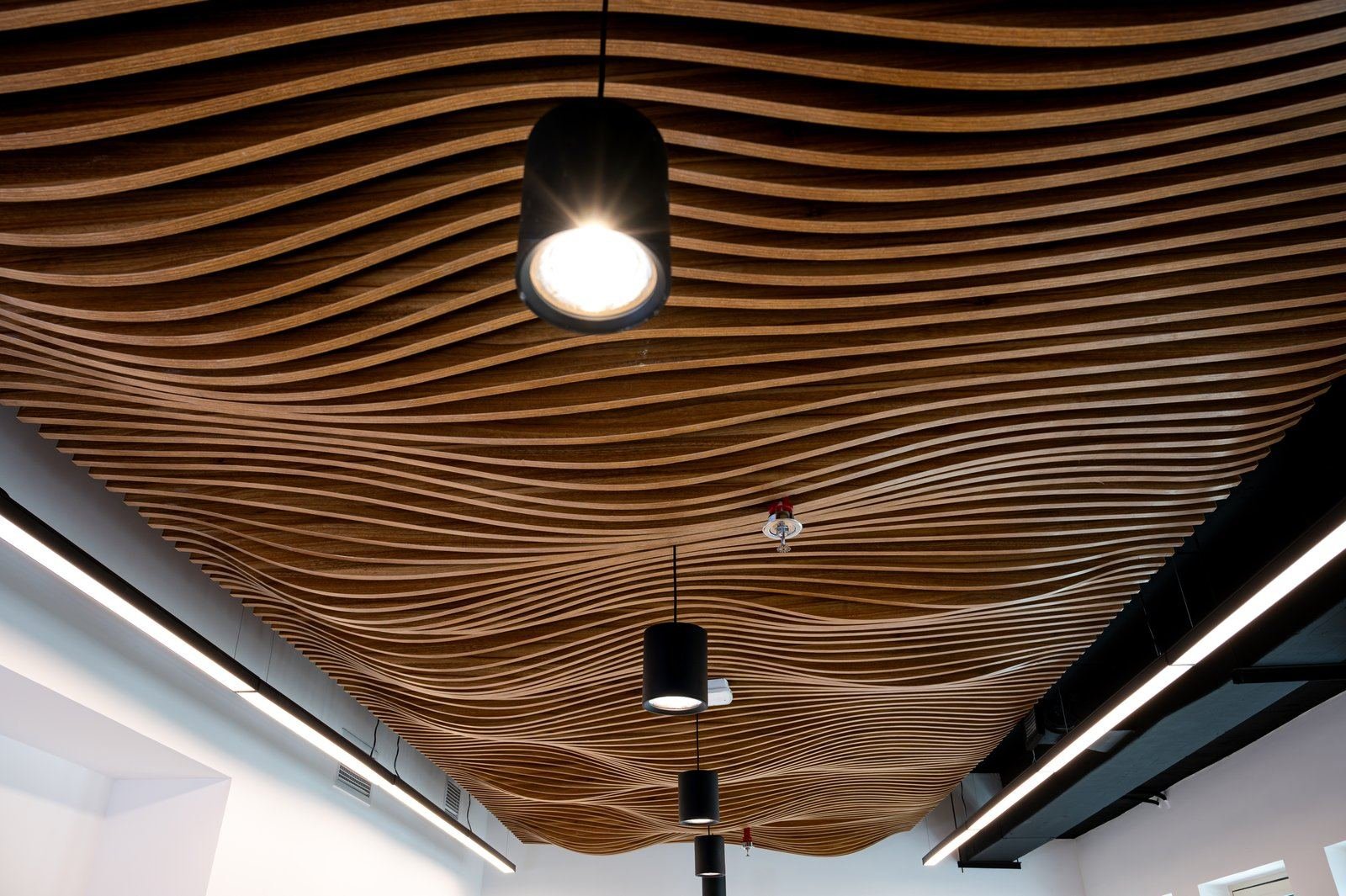
Extra circuits, dimming, feature lighting and automation pre-wired while the ceilings are still accessible.
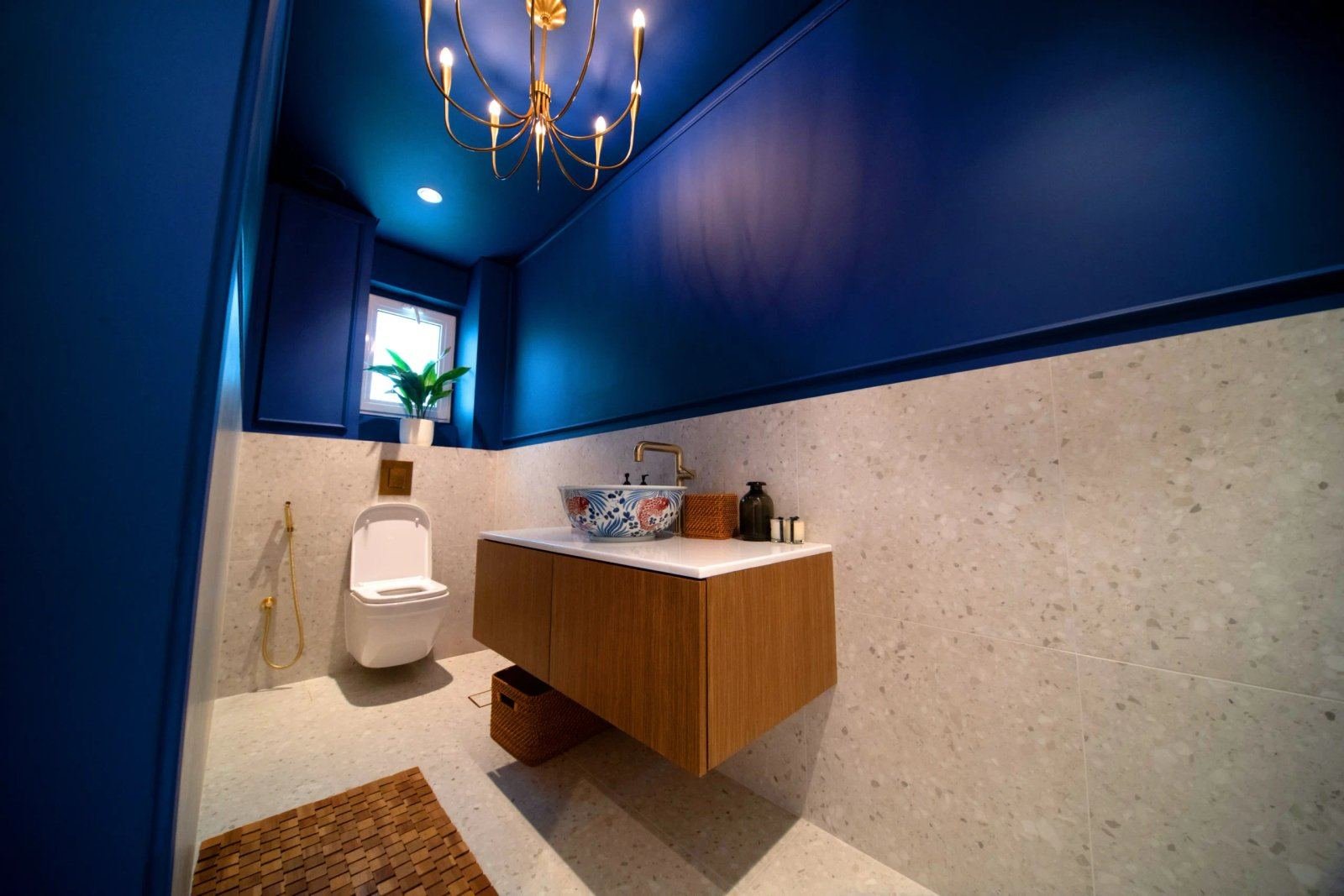
Upgraded vanities, sanitaryware, mirrors and shower screens, with re-tiling where the developer finish is not worth keeping.
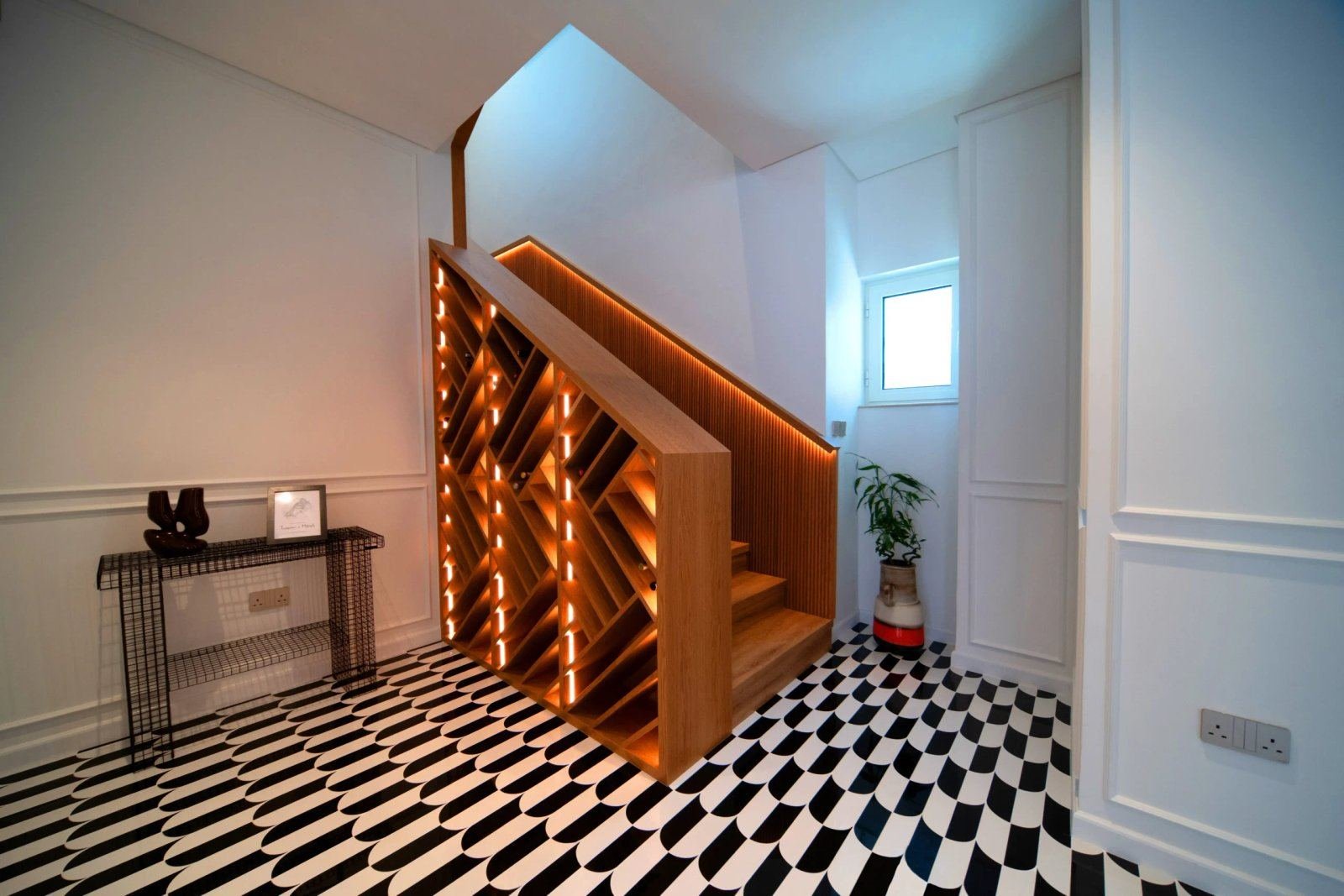
Developer white replaced with your colours, with panelling and feature walls made in Al Quoz and fitted before the furniture.
Sequence
The order matters more than the speed. Done in the wrong order, the same scope costs more and takes longer.
How we handle approvalsAt handover the developer owes you a unit free of defects, and fixes them under the defects liability period in your sale agreement. Those are not upgrades and you should not pay for them. We walk the unit with you, log the cracked tile and the misaligned door for the developer, and list separately what you want changed — so the two never get confused and the developer’s obligation is not lost by our starting work on top of it.
Nothing can start in a master-planned community without the developer’s NOC, and it cannot be applied for until the handover and title documents exist. So it goes in the day they do, in the drawing format that developer uses — Dubai Municipality format for Emaar, Trakhees format for Nakheel. Being a registered contractor with all six major developers means the submission is routine. Cosmetic upgrades usually need only the NOC; relocated wet areas or structural change add an authority permit, and we tell you which at the walk-through.
Electrical and AC changes first, while ceilings are open. Then flooring, with the whole property clear. Then kitchens, wardrobes and joinery, which were in production in our Al Quoz workshop during the NOC wait. Then paint, then bathrooms and sanitaryware. Nothing is done twice and nothing is moved to make room, which is the entire saving of doing it now.
A builder’s clean, DEWA activation in your name if it is not already done, a final walk-through against the scope, and the unit is ready for furniture delivery — or, for an investor, for the photographer and the listing. Warranty paperwork for appliances and fittings is handed over in one file.
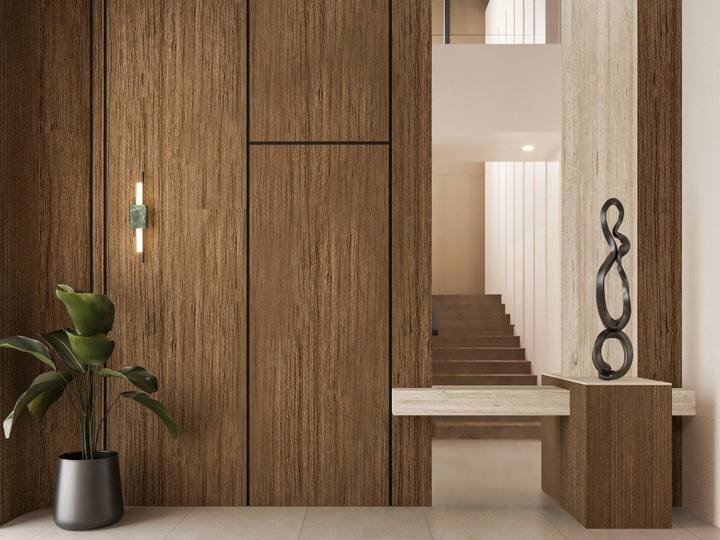
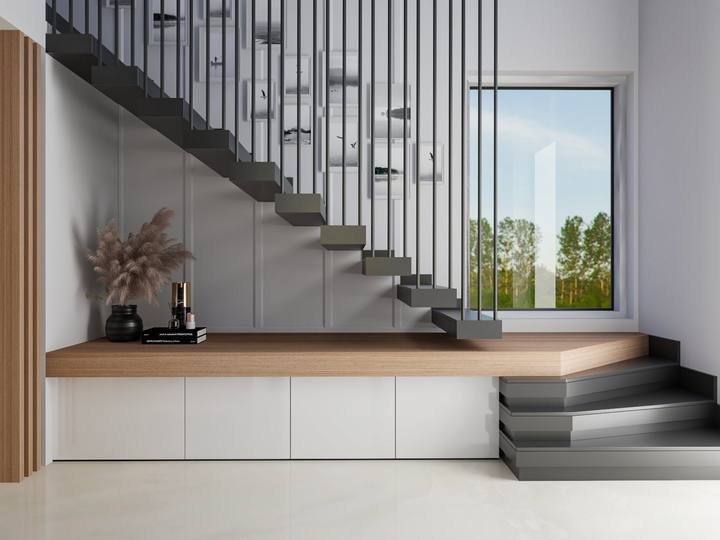
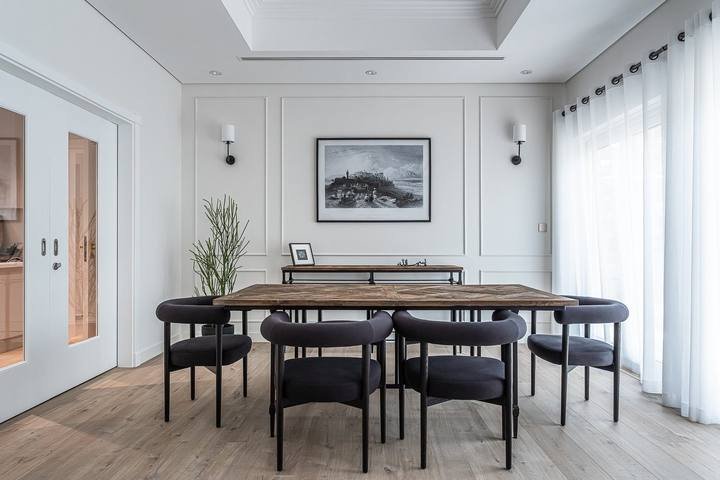
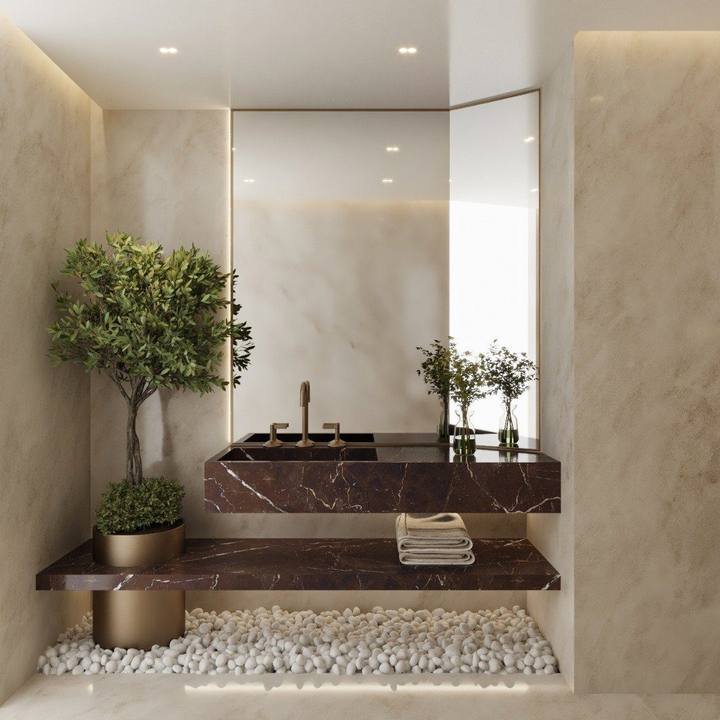
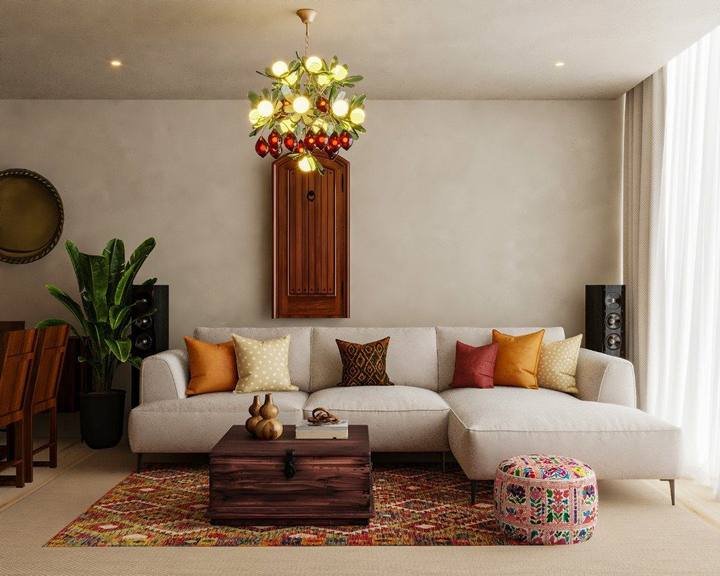
Recent new-build interiors
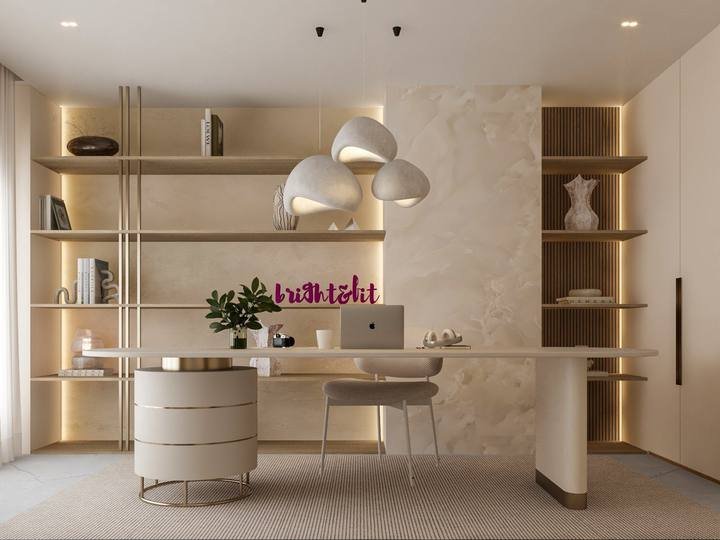
Tilal Al Furjan, The Valley, Al Furjan, Meydan, The Greens and Abu Dhabi.

Scope & programme
We price line by line in a BOQ after the handover walk-through, and issue a programme that starts the day the NOC is issued. These are the decisions that move both.
Some developer kitchens and tiles are worth keeping and some are not. We tell you honestly at the walk-through, because replacing a sound finish is the one cost in this scope that is avoidable.
Replacing floors is the largest line and the reason to do this now rather than later. Large-format porcelain and natural stone move the number more than timber or SPC.
Joinery is usually the second-largest line. Because it is made in our own workshop during the NOC wait, it does not extend the programme — only the specification moves the cost.
Paint, floors, joinery and lighting need only the developer NOC. Moving a wall or a bathroom adds an authority permit and a longer front end. Most pre-move-in upgrades stay cosmetic for exactly this reason.
An investor specification is durable and neutral and skips the personal items. An owner-occupier specification is where feature lighting, panelling and stone go. The two are priced very differently and we ask which you are first.
The developer NOC sits at the front and cannot be shortened. After that, long-lead items — imported stone, specified appliances — set the critical path, so we confirm lead times before the programme is issued.
Tell us the community and the handover date. We will walk the unit with you, separate snags from upgrades, tell you what the NOC will cover and come back with a BOQ and a programme that starts the day the documents are issued.
Common questions
Snagging, NOC timing, what to upgrade and what to leave. If yours is not here, call +971 50 448 3095.
Not quite. In a master-planned community the developer’s NOC must be issued before any work starts, and it can only be applied for once the handover and title documents exist. We submit on the day they do. Some developers allow a limited early inspection or measuring visit before handover on written request, which lets joinery production start in our workshop ahead of the NOC. We ask the developer on your behalf.
Snagging is the list of defects the developer must fix at its own cost under the defects liability period in your sale agreement: cracked tiles, doors that do not close, leaks, paint faults. Upgrading is anything you choose to change from the delivered specification. We keep the two lists separate so you do not pay for the developer’s obligations and so starting our work does not void them.
Not as a whole, but the developer will not warrant what you have changed. If you replace the kitchen, the developer no longer covers the kitchen; the structure, MEP and everything untouched remain covered. We document the condition of what we remove and photograph what we keep, so the boundary is clear if a claim arises later.
Flooring, wardrobes, electrical and lighting changes, and the kitchen are far cheaper and faster in an empty property and should be done now if you intend to do them at all. Paint is easy either way. Bathrooms depend on whether tiling changes. Furniture, curtains and loose items can wait. We give you that split honestly at the walk-through.
Yes, and it is a large part of this work. We specify for durability and broad appeal — porcelain in living areas, hard-wearing joinery finishes, simple lighting — sequence the programme so the unit is photographed the day the clean is done, and hand over a single file of warranties and manuals for the tenant. See also our apartment renovation page for the renovate-to-let angle on existing units.
DEWA activation is done in the owner’s name and we guide you through it so power and water are live for our works and for your move-in. Where the upgrade changes the electrical load — additional circuits, a larger distribution board — we make the DEWA submission as part of our scope.
Any Emaar, Nakheel, Meraas, Dubai Holding, Nshama or DAMAC community, because we are registered with all six, and in Abu Dhabi. Recent new-build work includes Tilal Al Furjan, The Valley, Meydan and The Greens. Our area pages explain the approval route for each.
We make the fixed and bespoke items — kitchens, wardrobes, panelling, TV units, headboards, dining tables — in our own workshop, and can coordinate loose furniture delivery into the finished unit. See our joinery and custom furniture pages.
Yes. We deliver across the UAE, including Abu Dhabi and Sharjah, with the developer and municipality route adjusted for each. Recent new-build work in Abu Dhabi includes The Dahlia and the apartment at Lamar.