

Turnkey fit-out meaning, in one sentence
A turnkey fit-out is a contract where one company takes a space from the brief to a finished, usable result, and hands you the keys. Design, approvals, construction, building services, joinery and, if agreed, furniture and fittings all sit with that one company. You make decisions; you do not coordinate trades.
That is the theory. In practice, "turnkey" is used in Dubai for everything from a genuine single-contract delivery to a firm that takes your order and passes the design, the joinery and the MEP to three other companies. The word on the proposal does not tell you which you are buying. The scope and the answers to a few direct questions do.
Turnkey, design and build, and build only
There are three common ways to buy a fit-out, and it helps to see turnkey next to the other two.
Build only (traditional)
You appoint a designer, the designer produces drawings, and contractors price those drawings. You hold two or more contracts. It gives you an independent designer checking the contractor’s work, and it gives you the job of managing the gap between them. When a drawing cannot be built as drawn, the question of who pays for the change lands on your desk.
Design and build
One firm designs and builds. The drawing and the build sit with the same team, so the gap between them closes. Design and build does not always include everything you need to move in, such as loose furniture, appliances, signage or soft furnishings.
Turnkey
Design and build, plus everything required to use the space when it is handed over. A turnkey contract should name those extras: furniture, fittings, curtains, appliances, signage, data, and the handover documents. If the contract does not name them, assume they are not included.
What a turnkey scope should list
A turnkey proposal worth signing sets out each of these as a priced line or a stated exclusion:
- Design: layouts, 3D views, finishes, lighting, joinery drawings and MEP layouts.
- Approvals: the developer or building application and the authority permit, handled by the contractor.
- Site works: demolition, partitions, ceilings, flooring, tiling, painting.
- Building services: air conditioning, electrical, plumbing, fire detection and sprinklers, coordinated with the design.
- Joinery: kitchens, wardrobes, reception desks, panelling, storage, and who makes them.
- Furniture and finishing items: loose furniture, curtains, upholstery, appliances, accessories.
- Handover: snagging, cleaning, as-built drawings and operation information.
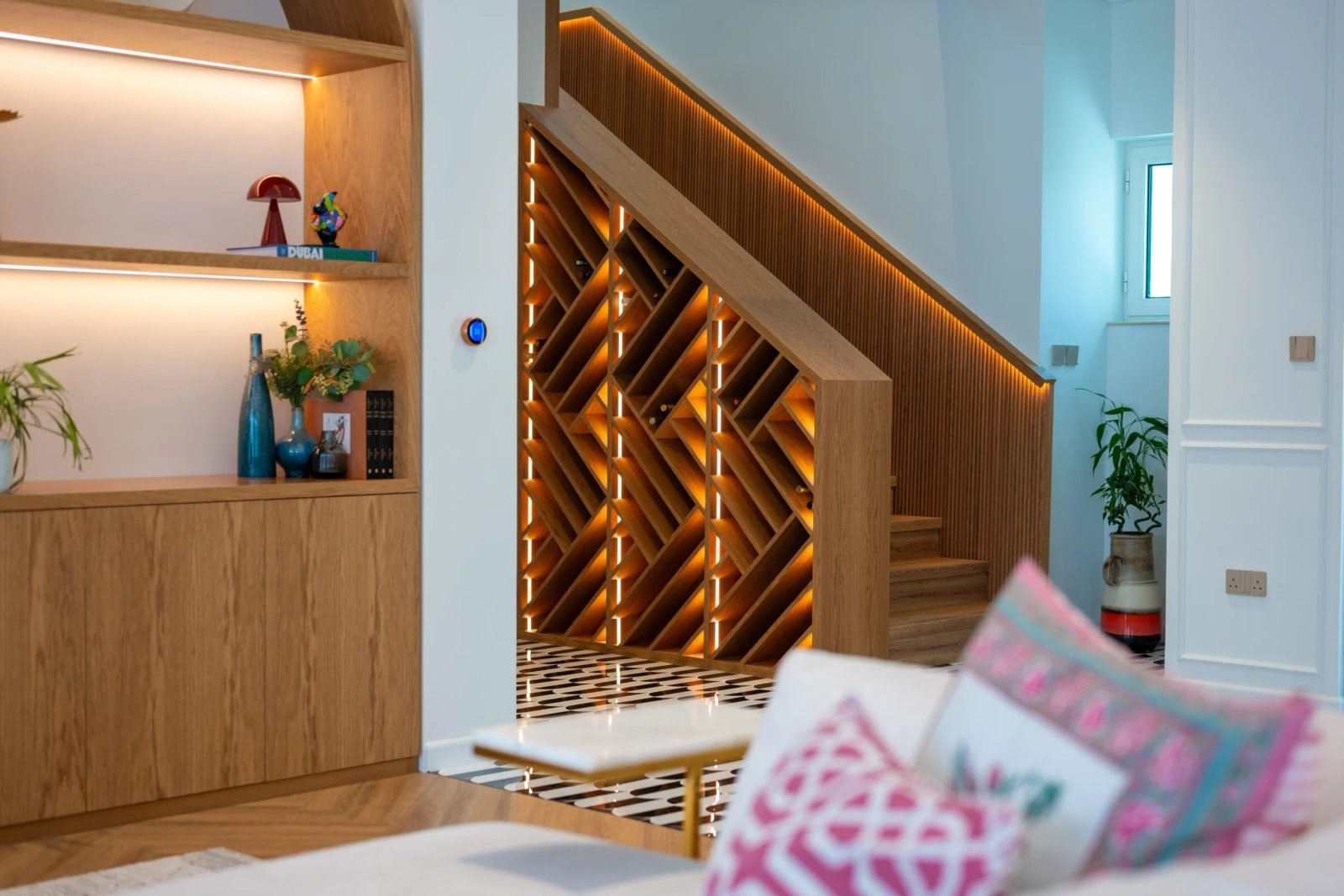
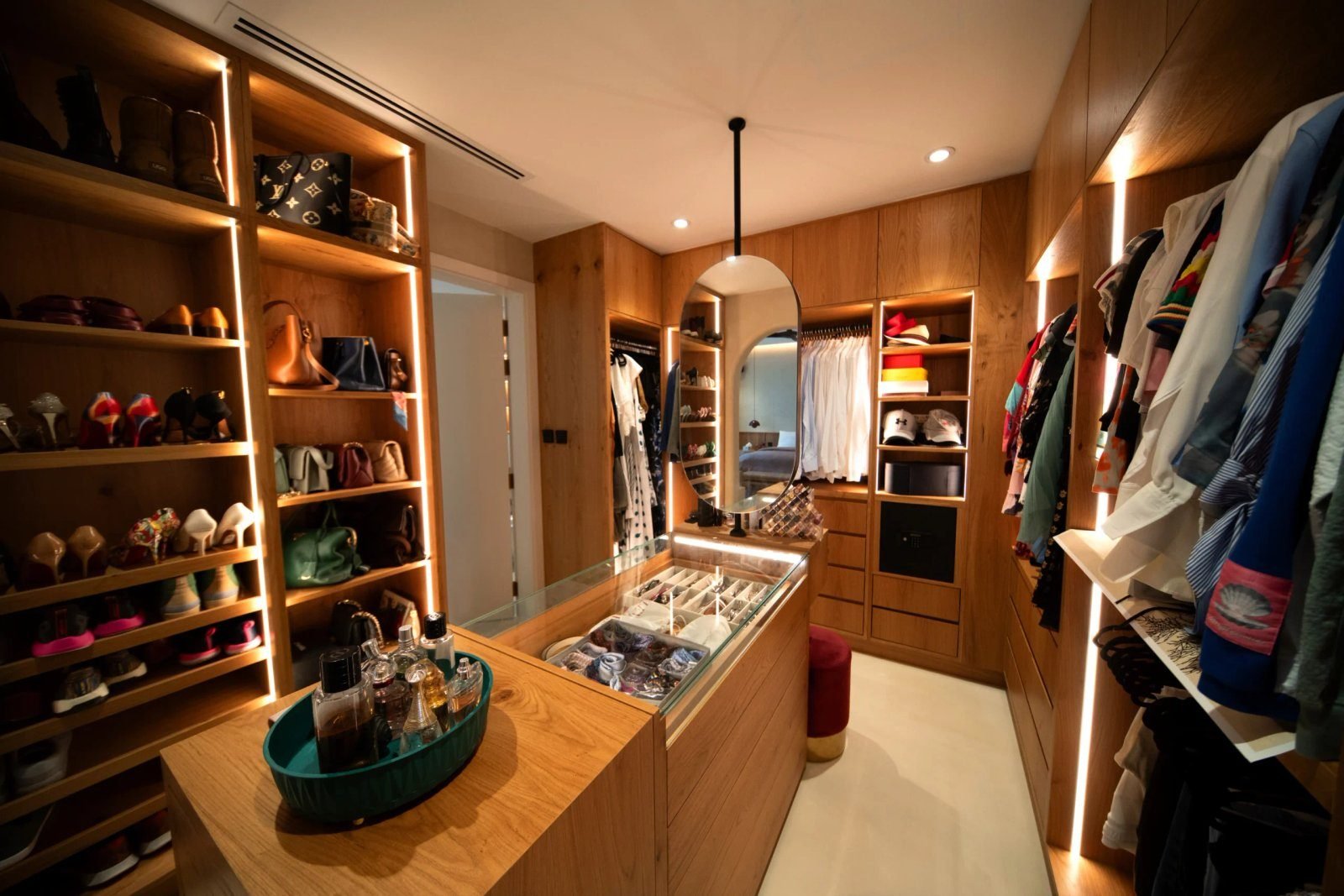
On our turnkey projects the joinery is made in our Al Quoz workshop, curtains and upholstery are made in-house, our own craftsmen handle joinery installation, tiling and gypsum, and specialist trades such as stone, glass and MEP sit under our contract rather than yours. That is the version of turnkey we think is worth paying for: one contract, and one team that actually controls the parts most likely to go wrong.
When turnkey is the right contract
- You do not have time to coordinate. Business owners opening a clinic, a shop or an office, and villa owners who work full time, rarely have the hours to chair site meetings between a designer and three contractors.
- You want one point of accountability. If the ceiling clashes with the ductwork, there is only one company to call, and it cannot point at anyone else.
- The project has a fixed opening or move-in point. A single programme run by one team is easier to plan backwards from than several overlapping ones.
- You are abroad or new to Dubai. Turnkey suits owners who cannot visit site often and do not yet know how developer NOCs and permits work here.
When it is not
- You want independent design oversight. Some clients, especially larger companies, prefer a designer or project manager who works for them and checks the contractor. That is a reasonable choice, and it points to build only.
- You plan to tender each package. If your procurement rules require separate tenders for joinery, MEP and furniture, turnkey will not fit.
- The scope is tiny. Repainting a few rooms or replacing a kitchen worktop does not need a turnkey contract.
- You already have a designer you trust. Then you want a contractor who builds to someone else’s drawings well. We do this too, and our joinery subcontracting work is built on it.
Questions to ask turnkey fit-out contractors in Dubai
These separate a company that delivers turnkey from one that resells it:
- Who produces the design drawings, and are they reviewed by the people who will build them?
- Who makes the joinery? Your own workshop, or a supplier you order from?
- Which trades are your own people, and which are subcontracted under your contract?
- Who prepares and submits the developer NOC and the authority permit?
- Is the price a line-by-line BOQ, or a single figure with an allowance list?
- How is a change requested, priced and approved during the job?
- What does handover include, and who signs off the snag list?
Ask for the answers in writing. A contractor who delivers turnkey properly will have them ready, because they are the same questions it has to answer internally to run the job.
How we run a turnkey project
The sequence is the same for a villa or an office. We visit the site and take the brief. Our designers draw the layout, the finishes and the joinery, with the MEP set out on the same drawings. We price it in a BOQ so every line can be checked. Approvals are handled while the joinery goes into production in Al Quoz. On site, our craftsmen and the trades under our contract build to the approved drawings, and we snag with you before handover.
For finished work, see the Villa at Al Furjan, taken from demolition to a fully furnished home, and the Proglobal Media office in Silicon Oasis. For the full scope and how we work, see our turnkey fit-out service.